Executive summary
Saint Lucia needs fit-for-purpose court facilities. For years, criminal, civil, commercial, family and magistrates' work has been dispersed across rented or unsuitable premises. The Eastern Caribbean Supreme Court recorded serious health, security and access failures long before the present contract. The new complex can consolidate services, separate public, judicial and detainee movement, support digital hearings and replace a fragmented operating environment.
The financial record needs the same clarity as the physical case. Government identifies a fixed EC$143 million design, construction and fit-out price. NH's chairman separately described a US$61 million, roughly EC$165 million private investment after transaction and bridging-interest costs. The lease is meant to amortise the project over no more than 12 years, but Government has not published the quarterly rent, interest and fees, maintenance component, total nominal payments or present value. A newspaper later reported a roughly EC$292.5 million 12-year schedule from an unnamed source who said they saw the agreement. That figure is material but unverified.
The design also changed after the April 2024 signing. The original main building was planned on the condemned courthouse site. Following concerns about scale and possible effects on the nearby Cathedral, Cabinet moved the main component to the former Gaiety Cinema property and entered a reported EC$14.5 million sale agreement. The former Education site remains the annex. Current briefings say more than 110,000 square feet, 14 courtrooms and 18 judicial chambers. Earlier figures such as 126,345 square feet, four storeys, six magistrates' chambers and basement parking belong to the earlier design unless Government reconfirms them.
The supplier picture has improved. Themis is the private BOLT vehicle, NH International the main contractor, Republic Bank a financing partner, NIPRO Government's project manager, ACLA the reported architect and Aleron the structural engineer. September updates name a Trinidadian façade manufacturer, show envelope work and propose a park on the former Family Court site. These disclosures deserve credit, but do not replace contract values, test records, planning approval or measured Saint Lucian participation.
The right conclusion is neither that the project is self-evidently wasteful nor that a fixed price removes public risk. The need is real; the regional price record is too inconsistent for a clean verdict; and a 12-year lease remains a public commitment even without a sovereign loan guarantee. Before payments and occupation, Government should publish a contract-and-cost account, a controlled final design pack, independent commissioning results and a justice-service operating plan with measurable case, access and building outcomes.
Published 29 August 2026; updated 16 September. This pass checks the 31 August ground-floor description, 2 September park proposal, 5 September façade update and 15 September supplier disclosure. It adds the manufacturer's own record, general enclosure guidance and dated court-service evidence. Earlier budget figures retain their original source dates. The September review did not locate the executed contract, payment schedule, approved design pack or independent progress certificate.
High confidence on the need, parties, official EC$143 million headline, broad BOLT structure and construction start. Medium confidence on current detailed scope and progress because the final approved design pack and independent certifications are not public. The reported EC$292.5 million lease total is unverified.
Key findings
The need is established independently of the present administration.
ECSC records from 2007 onward describe outdated, unsafe and inaccessible facilities, heavy rental dependence and criminal courts unusable for much of 2018. The project is not a newly invented requirement. Its current price, procurement and design still require separate scrutiny.
Evidence-led finding · Source 12, Source 13, Source 14EC$143 million is a construction headline, not the disclosed taxpayer total.
The official amount covers design, construction and a substantial fit-out. The sponsor's higher EC$165 million investment adds transaction and construction-period financing costs. Neither published figure states what Government will pay over the whole lease, including financing return, maintenance, insurance, indexation or termination exposure.
Evidence-led finding · Source 01, Source 02, Source 04No guarantee does not mean no fiscal obligation.
Government says it did not guarantee the private project loan. That limits one form of contingent liability. The public sector still expects to make quarterly payments for up to 12 years, and public land enters the financing structure. The contract determines the remaining payment, change, default, force-majeure, refinancing and handback risks.
Evidence-led finding · Source 01, Source 02, Source 21, Source 22The revised site adds a cost and scope question.
The 2025/26 Budget records the Gaiety move and EC$14.5 million sale agreement. The 2026/27 Estimates separately show an EC$5.399 million government-side project total, including past spending and a current-year estimate, not all completed expenditure. The 2 September park graphic describes a proposed third precinct element at the former Family Court site. Publish which account pays for demolition, landscaping, drainage, lighting, security and continuing maintenance. Do not assume those costs are inside the BOLT price or add them to it without reconciliation.
Evidence-led finding · Source 07, Source 20, Source 39The current approved building schedule is not public.
The 31 August graphic adds ground-floor functions and separate circulation, but not a controlled room schedule. The 2 September park graphic labels both court blocks as six floors, alongside earlier four- and seven-storey descriptions. Sources also differ on courtrooms, chambers and parking. These may reflect revisions or counting conventions. A promotional graphic is useful disclosure, not proof of planning approval. Publish one dated, approved schedule and a bridge from earlier designs.
Evidence-led finding · Source 01, Source 07, Source 08, Source 09, Source 10, Source 38, Source 39A façade supplier is now named. Contract values and local shares remain open.
On 15 September the project identified Precast Concrete Services Limited in Santa Cruz, Trinidad and Tobago, as the GFRC-panel manufacturer. The firm's own site corroborates its location and product capability, not the Halls contract or quality results. This narrows a real information gap. Most package values, installers, worker hours, wages, training and retained local value remain unreported. Regional sourcing is not the same measure as Saint Lucian participation, and imports are not by themselves evidence of poor value.
Evidence-led finding · Source 02, Source 09, Source 41, Source 42Institutional consultation is documented; user testing is not.
Public records name the ECSC, Bar Association, magistracy, Court Administration, Justice, Attorney General, Economic Development, Planning, police, National Trust and, after concerns emerged, the Catholic Church. SLPA did not locate a consultation report or structured testing with disabled users, victims, children, legal aid, interpreters, detainees, jurors, nearby traders or general court users.
Evidence-led finding · Source 03, Source 05, Source 06, Source 07A regional price warning is justified; a verdict is not.
Using the earlier 126,345-square-foot scope, the EC$143 million figure is about EC$1,132 per square foot, roughly twice the nominal 2009 Barbados and announced 2024 Bahamas figures after fixed-peg conversion. Yet Saint Lucia and The Bahamas are close on cost per courtroom. Different years, functions, fit-out, financing and cost definitions prevent a reliable overpricing conclusion.
Evidence-led finding · Source 04, Source 15, Source 16, Source 17, Source 31, Source 32, Source 33, Source 34, Source 35The public cannot reproduce the procurement judgment.
Officials say partner due diligence was rigorous. The Public Procurement Act requires PPP tests for affordability, value for money, risk transfer, fiscal fit and competitive potential. No business case, public-sector comparator, EOI or RFP, bidder evaluation, award notice or direct-procurement justification for the BOLT was located in the public record.
Evidence-led finding · Source 03, Source 18, Source 19A modern building will not clear a backlog by itself.
A 26 May 2026 government release reports approximately 100 criminal matters disposed of between February and May. That is an attributed service output, not a measured net backlog reduction or a result of the unopened Halls. The period begins before the Backlog Reduction Court's formal 19 March opening, so it must not be described as 100 post-opening cases. Room capacity needs a funded case-flow, staffing, digital and public-access plan alongside it.
Evidence-led finding · Source 23, Source 24, Source 46Opening-day quality and 12-year maintenance matter as much as construction progress.
The old courthouse's indoor-air problems, early HVAC difficulties at Barbados' judicial centre and later court-facility closures elsewhere in the region show the whole-life risk. Independent testing, payment deductions, asset records, lifecycle replacement and handback standards need to be explicit before the lease starts.
Evidence-led finding · Source 14, Source 15, Source 25Regional evidence, used carefullyThree Caribbean projects show why price, operations and maintenance must be read together.No identified project is a clean like-for-like price comparator. These cases are more useful as operating and disclosure lessons.3 cases
A privately financed judicial centre opened under a long lease, then exposed the importance of fiscal and building-performance scrutiny.
- What produced it
- The Central Bank treated BOLT as a financing choice requiring present-value comparison with public borrowing. Early judicial records also documented air-conditioning and fungus problems after opening.
- Use in Saint Lucia
- Publish the present value of all payments and make indoor-air, humidity, availability, maintenance and lifecycle replacement enforceable service tests.
- Boundary
- The US$35 million 2009 construction figure is not a current whole-life cost and should not be inflation-adjusted casually.
A new 342,000-square-foot, 19-court complex was announced with an early BS$70 million investment figure.
- What produced it
- The public programme identifies court types and gross space, allowing rough capacity checks even though the final fiscal exposure is not yet public.
- Use in Saint Lucia
- Publish a final court-by-court room schedule and capacity model, then compare total capital and lifecycle cost on the same scope basis.
- Boundary
- The Bahamas amount is an announced investment, not a verified final outturn; B$ parity with US$ does not make the projects identical.
Judicial functions later dispersed while the main complex underwent assessment and repairs.
- What produced it
- Facility interruption can dislocate court services even where extra courtroom capacity has been added.
- Use in Saint Lucia
- Keep fallback premises until stability gates pass and maintain a tested continuity plan for fire, flood, power, network, HVAC and major defects.
- Boundary
- The public record does not provide a comparable project price or establish the exact cause of every closure.
Eight tests before lease commencement
The project is ready only when the building, the contract and the justice service are ready together.
Each test should have a named owner, evidence pack and pass or corrective-action decision before courts move.ContractFull public costCan taxpayers follow every payment layer?
Publish the redacted BOLT and amendment, land treatment, quarterly schedule, present value, maintenance charge, fees, indexation, deductions, termination exposure and EC$1 handback conditions.
ProcurementReproducible choiceWhy was this route and partner best?
Publish the business case, public-sector comparator, affordability test, procurement route, evaluation or direct-award justification, due diligence and conflicts record.
DesignOne controlled packWhat exactly is being delivered?
Publish the approved site plan, room and area schedule, floor count, accessibility statement, parking and movement plan, consultant register and revised completion baseline.
SafetyIndependent proofWill every system work together?
Publish the façade design basis, panel and anchor assurance, corrosion protection, joints, water checks and relevant fire-performance evidence. Witness integrated drainage, power, lifts, HVAC, air quality, acoustics, AV, cyber, custody and emergency-route tests. These are SLPA proposals, not a finding of defects.
OperationsCases, people, timeCan fourteen courts improve service?
Cost and staff the judicial, registry, family, witness, legal-aid, interpretation, security, custody, ICT and facilities model against caseload and hearing demand.
AccessEnd-to-end equalityCan every court user complete the journey?
Audit travel costs as well as street approach, screening, counters, lifts, toilets, hearing loops, witness spaces and evacuation. Preserve useful southern outreach and assisted-digital access. A lift in Castries cannot alone remove an island-wide access barrier.
Local valueNames and amountsWhat stays in Saint Lucia?
Publish contractors and suppliers, values, labour hours, wages, materials, training, imported packages and payment performance rather than relying on broad local-content claims.
LifecycleCondition at transferWho keeps the asset working?
Set availability, response, preventive-maintenance and replacement standards, audit the asset register annually and begin independent handback surveys years before transfer.
Decision ruleDo not start full lease or availability payments solely on a practical-completion certificate. Require financial close disclosure, independent technical acceptance, operational simulations, critical-defect closure and a published opening-readiness account.
Different layers, not one interchangeable total
Published and reported Halls of Justice cost figures.
EC$ millions, nominal figuresEC$143m is Government's fixed build-and-equip figure. EC$164.7m is the sponsor-reported private investment after transaction and bridging costs. EC$292.5m is an unauthenticated newspaper report of 12-year payments and must not be treated as verified. EC$14.5m is the reported Gaiety sale agreement; EC$5.399m is the separate government-budget project total. These bars do not add together because categories may overlap.
Use this data
Copy the visible figures or download them with the unit, claim label and method note attached.
SLPA policy proposal
Halls of Justice Public Value and Readiness Account
Make the project auditable from financial close through transfer, and make lease commencement depend on a safe, accessible and operationally ready justice service rather than the appearance of a finished building.
Publish the contract account
Release the BOLT and revised-site amendment with narrow redactions, plus quarterly payments, total and present-value cost, financing, fees, maintenance, risk allocation, deductions, termination and handback terms.
Reconstruct the value-for-money decision
Publish the procurement route, business case, public-sector comparator, affordability and fiscal-risk tests, evaluation or sole-capability justification, legal review milestone and approvals.
Control the current design
Issue one dated pack with approved sites, areas, rooms, floors, capacity, parking, accessibility, circulation, resilience criteria, consultants, approvals and completion baseline.
Name the supply chain
List every material consultant, subcontractor and supplier, contract scope and value, nationality, local labour and material share, training, safety record and payment performance.
Build an intelligent public client
Give NIPRO and Government an independent cost, contract, commissioning, facilities, fiscal, accessibility, court-operations and ICT team with change control and public reporting.
Commission before paying
Tie service commencement to independent integrated tests, operational simulations, statutory approvals, critical-defect closure, complete asset records and trained staff.
Open the justice service
Fund the case-management, registry, family, witness, legal-aid, interpretation, custody, security, digital, records, ICT and facilities operating model before migration.
Measure outcomes and condition
Publish quarterly case, access, user, technology, building, fiscal and local-value results; independently assure them annually and prepare the asset for EC$1 transfer.
Delivery sequence
Open the contract and scope account.
- Publish the signed BOLT, land lease and revised-site amendment with a redaction schedule.
- Reconcile EC$143m, EC$164.7m, EC$14.5m land and the EC$5.399m government-side project total in one sources-and-uses table, separating past spending from the current-year estimate.
- Publish the current approved room, area and floor schedule, design revision and contractual completion date.
- Record the named GFRC manufacturer and identify the installer in a package register; identify the proposed park's funding and maintenance owner.
Show value, finance and ownership.
- Publish the procurement and value-for-money record, quarterly schedule, nominal and present-value cost and existing rents expected to end.
- Identify Themis, lenders, sponsor finance, beneficial ownership, security, rates, fees, currency mix and refinancing-gain rules.
- Publish the NIPRO mandate, independent-certifier role, baseline programme, change register and non-security risk summary.
Revalidate the operating brief with users.
- Test every room against caseload, hearing length, staffing, custody, records, digital and future-demand evidence.
- Run documented reviews with disabled users, victims, children and family services, legal aid, interpreters, defence, jurors, registry, police and nearby stakeholders.
- Publish the accessibility statement, resilience design basis, traffic and parking plan, environmental and heritage safeguards and final supplier register.
- Before façade work is concealed, record the agreed inspection hold points, panel traceability, fixing checks and closure of defects. Publish a non-sensitive assurance summary.
Prove technical and service readiness.
- Appoint independent commissioning, accessibility, custody, cyber and indoor-air-quality assurance.
- Recruit and train the full operating establishment; integrate ECSC e-litigation, courtroom AV, records, security and downtime procedures.
- Publish a division-by-division baseline and preserve effective outreach in the south. Test travel, disability and assisted-digital access with actual court users.
- Run full hearing, vulnerable-witness, power-loss, network-loss, fire, detainee-emergency and accessible-journey simulations.
Publish results and protect the asset.
- Phase migration, retain fallback premises until stability tests pass and publish reviews at 30, 90, 180 and 365 days.
- Report quarterly case flow, access, technology, building availability, payments, deductions, changes, claims, safety and local value.
- Conduct annual condition reviews and formal handback surveys at three years, one year and final transfer.
Governance without case interferenceFive functions must remain distinct and jointly accountable.Contract oversight cannot direct individual cases, and contractor progress reports cannot substitute for owner-side certification.5 owners
Publish affordability, payments, risks, appropriations, procurement record and full-life cost; maintain contract and change control.
Control the approved scope, programme, certification, changes, defects, local-content record, commissioning and handback evidence.
Set the room brief, case-management model, staffing, digital workflow, user service, opening gates and performance measures while preserving judicial independence.
Deliver the contracted facility, financing and services; disclose performance, changes, safety, supply chain and maintenance under the agreement.
Verify completion, cost, accessibility, safety, custody, systems, condition and non-security results, with disability, family, victim, legal and public-user representation.
Publish mandates, membership, conflicts, non-sensitive decisions and corrective actions. Courts and Government should also state clearly that the oversight structure cannot influence the merits, listing or outcome of any case.
Direct answers
What the public record supports, and where it stops.
01Why does Saint Lucia need the Halls of Justice?
Because core court services have long operated across rented, unsuitable or unsafe premises. ECSC records independently document security, health, accessibility and continuity failures. A consolidated purpose-built facility is a reasonable public need.
02Where is the current project?
In central Castries. The current main component is on the former Gaiety Cinema property, with the former Ministry of Education site used for the annex. Public descriptions say elevated links cross Westall Street. This is a revision of the April 2024 old-courthouse-site scheme.
03What will it contain?
Construction-stage sources support 14 courtrooms and 18 chambers for judges and magistrates, serving civil, criminal, family and related work. The agreement also listed witness rooms, offices, a library, conference room, police post, holding cells and secure dock. A final approved room schedule is not public.
04Who has the contract?
Government signed the BOLT with Themis Ltd, described as an NH subsidiary. NH International is the main contractor. NIPRO acts for Government. ACLA is architect and Aleron is structural engineer. The exact registered identity and capital of the SPV and most subcontractors are not published.
05Who is financing it?
Themis is meant to arrange private finance. NH's chairman said Republic Bank would syndicate a US$61 million package and that a sponsor-related company would also lend. Republic Bank later confirmed involvement, but the final lender roster, amounts, interest, fees and security are not public.
06Does the project cost EC$143 million or EC$165 million?
Both figures describe different layers. EC$143 million is Government's fixed design, build and fit-out headline. About EC$165 million is the sponsor-reported private investment after transaction and construction-period bridging costs. Neither is the authenticated total of 12 years of public payments.
07Will taxpayers pay about EC$292.5 million?
A Guardian report calculated that amount from a source who said they had seen the BOLT payment schedule. The figure has not been authenticated by a published contract or official confirmation. It should be treated as a material reported claim that Government can settle by publishing the schedule.
08Is it debt?
Government did not guarantee the private loan, so it is not the same as a conventional guaranteed sovereign borrowing. Government still expects to make a long stream of lease or availability payments. Accounting classification depends on control and risk under the contract; the fiscal commitment should be disclosed regardless of label.
09Was the project competitively procured?
Officials say rigorous due diligence selected NH, while the opposition alleges there was no tender. SLPA did not locate a BOLT EOI, RFP, bidder evaluation, award notice or direct-procurement justification. That absence from the public record does not prove no lawful process occurred; it prevents the public from reproducing the decision.
10Is the price too high for the Caribbean?
It looks high on some rough nominal ratios, including cost per square foot and share of GDP. It is close to The Bahamas on cost per courtroom. The projects differ by year, function, fit-out and financing, so the evidence supports an independent value-for-money review, not a confident verdict of overpricing.
11How much work and supply are Saint Lucian?
The contractor projected about 300 workers, mostly Saint Lucian. Local concrete, steel fabrication and piling are reported. A Trinidadian façade manufacturer is now named, but actual Saint Lucian wages, hours, training, package values and installation participation remain unmeasured in the public record. Company location, spending through a local firm and local value added are different measures.
12Does removing a GFRC panel from its mould after about 24 hours mean it is fully cured?
No. Demoulding, curing, test acceptance, shipment and installation are separate steps. General GRCA guidance links demoulding to handling strength and treats curing separately. The disclosed timing alone proves neither adequate final performance nor a defect. Ask for the project-approved process and acceptance evidence.
13Is the proposed park approved and paid for?
The 2 September project post proposes green space at the former Family Court site with mature trees retained. SLPA did not locate a controlled approval, cost allocation, public-access agreement or maintenance budget. The labelled site graphic should not be mistaken for those records.
14Who was consulted?
Ceremony and budget records name the ECSC, Bar Association, magistracy, Court Administration, Justice, Attorney General, Economic Development, Planning, police and National Trust. Government and the Catholic Church later met about scale and Cathedral risk. No complete consultation report or response matrix is public, and the record reviewed does not show structured testing with several key user groups.
15When should it open?
Physical construction officially began on 11 August 2025 with a two-year programme, suggesting about August 2027; some official messaging says mid-2027. Contractor updates report substantial progress. The contractual completion, commissioning, move and first-hearing dates have not been published as one controlled schedule.
16Will a new building reduce court delay?
It can remove room, security and technology constraints, but not by itself. Delay also depends on judges, magistrates, registry and support staffing, case management, law, disclosure, legal representation, digital systems and active backlog work. The opening plan must measure service outcomes, not just rooms occupied.
Public accountabilityMeasures for public accountabilityQuarterly operating signals and one independently reviewed annual outcome report.16 measures
Show capital, land, owner costs, financing, maintenance, nominal and present-value payments, deductions, changes, claims and termination exposure.
Publish baseline and current dates, independent completion percentage, critical path, delay causes and recovery action.
Track approved gross and net area, court and room counts, parking, design revisions, provisional sums and change value.
Report Saint Lucian contract value, labour hours, wages, suppliers, materials, apprenticeships, training and payment time.
Report incidents, lost-time frequency, inspections, training and closure of non-security-sensitive findings.
Show integrated test completion, critical defects, retests, statutory approvals and acceptance evidence.
Compare scheduled and used hearing hours by room and explain cancellations without turning occupancy into a crude performance target.
Publish incoming, resolved, pending and aged cases, clearance rate, actual elapsed time and the oldest cases by division.
Track trial-date certainty, late starts, cancellations, adjournments and coded reasons, including room and technology failures.
Measure security and registry waits at the median and 90th percentile, inquiry response and complaint resolution.
Track accommodation requests, response time, access defects, interpreter provision and unwanted witness or party contact.
Report e-filing uptake, network and courtroom-AV uptime, failed hearings, helpdesk response and assisted-digital use.
Track courtrooms, lifts, HVAC, indoor air, security, generators and planned maintenance with deductions where standards fail.
Publish electricity kWh per square metre, water, peak demand, utility cost and renewable contribution for each building.
Use privacy-safe surveys of understanding, treatment, safety and accessibility, not satisfaction with case outcomes.
Publish annual independent condition, maintenance backlog, lifecycle replacements and rectification against the transfer standard.
04Limits, uncertainty & sources16 limits · 49 sources
Limits of this analysis
- The signed BOLT, lease, land lease, revised-site amendment and payment schedule were not publicly located. Contractual conclusions therefore rely on the official summary and attributed reporting.
- The EC$292.5 million 12-year payment total is a newspaper calculation based on an unnamed source who said they saw the agreement. It is not treated as verified.
- The public record uses Themis Ltd and Themis Holdings Ltd. SLPA did not locate a corporate registry extract confirming the precise contracting entity, jurisdiction, directors or beneficial ownership.
- The EC$14.5 million Gaiety figure is described as a sale agreement in the 2025/26 Budget. The record reviewed does not show closing, seller, valuation, payment source or whether it sits inside the EC$143 million cap.
- The EC$5.399 million government-side project total is drawn from the 2026/27 estimates. Detailed payees and reconciliation to the reported land agreement were not located.
- Project graphics disclose some ground-floor functions and a proposed park, but no controlled current approved site/floor/room/area schedule or DCA decision was located. The post dates are publication dates; they do not date design approval, panel manufacture or installation.
- Room, chamber, floor, parking and annex counts changed across design generations. The article labels those conflicts and does not select a final number without an approved schedule.
- Construction progress, resilience and on-cost claims are mainly Government, contractor or project-channel statements; independent certification was not located.
- No current ESIA, traffic study, heritage-impact study, Cathedral monitoring plan, geotechnical report, structural design basis or independent peer review was located.
- The project now names the GFRC manufacturer. Most package values, installers and measured local-content outcomes remain outstanding. General GRCA and NIBS guidance informs SLPA proposals; this review has not established its adoption by the contract or domestic law, nor found panel defects or non-compliance.
- The ECSC figures added here cover calendar 2023, not current 2026 demand. Its report warns about pending-case data quality. Neither those historic figures nor Government's approximate February–May 2026 disposals establish the current active backlog or a causal effect of the new complex.
- Regional comparison figures differ in year, scope, cost definition, finance, fit-out and status. Ratios are screening signals, not proof of efficiency or waste.
- No current Saint Lucia court-by-court caseload, room-utilisation, staffing, adjournment, user-access or facility-cost baseline was located in one public dataset.
- The two-year construction period is measured from the reported 11 August 2025 physical start, not the April 2024 sod-turning. The exact contractual completion and acceptance dates are not public.
- The supplied transcripts contain automated-transcription errors. Claims were cross-checked against official, institutional or contemporaneous sources wherever possible.
- This is policy and public-finance analysis, not legal, engineering, quantity-surveying or accounting advice and not a finding of illegality or wrongdoing.
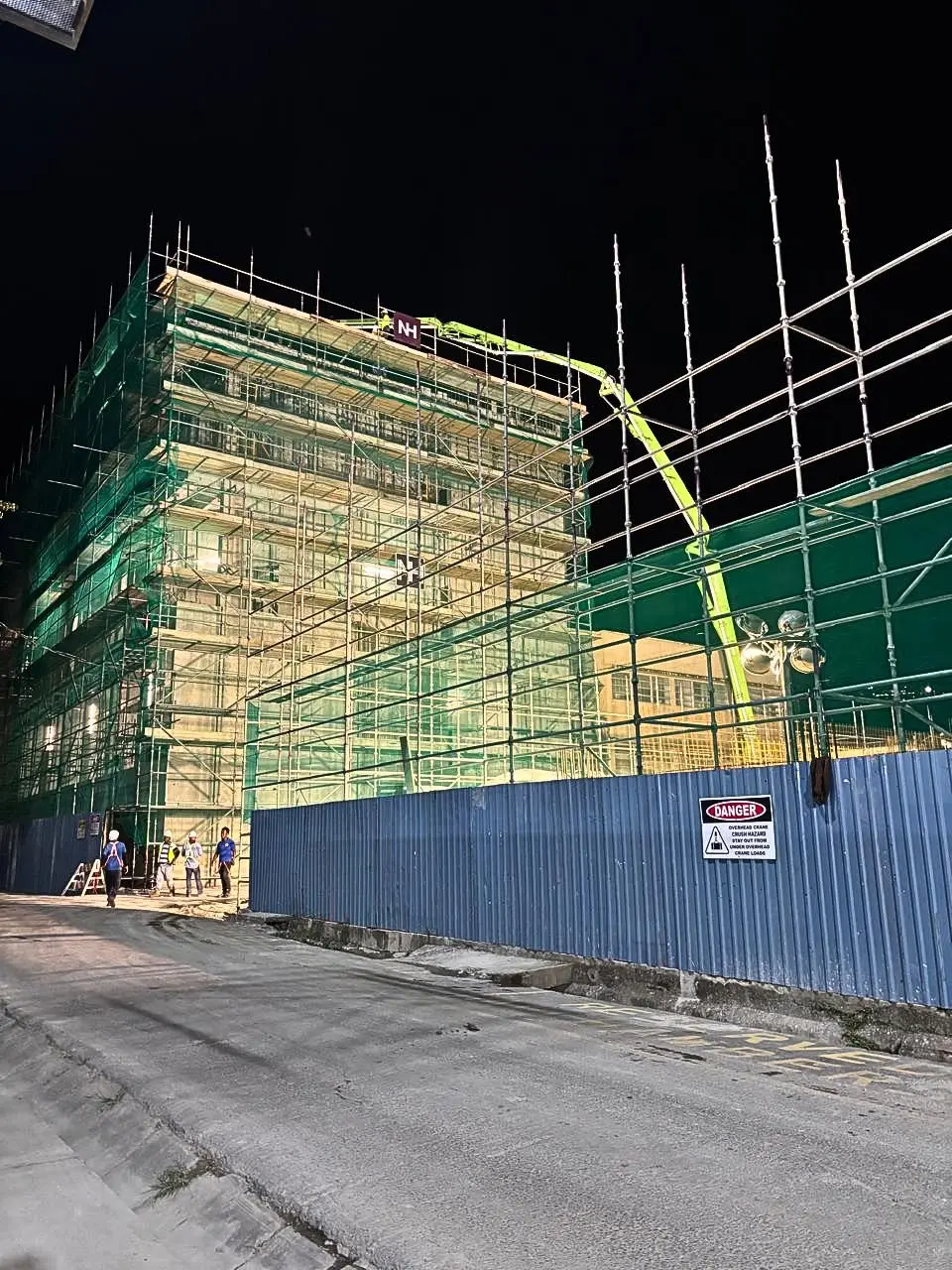
Photographs identify place and activity. Findings come from the cited records.