
Executive summary
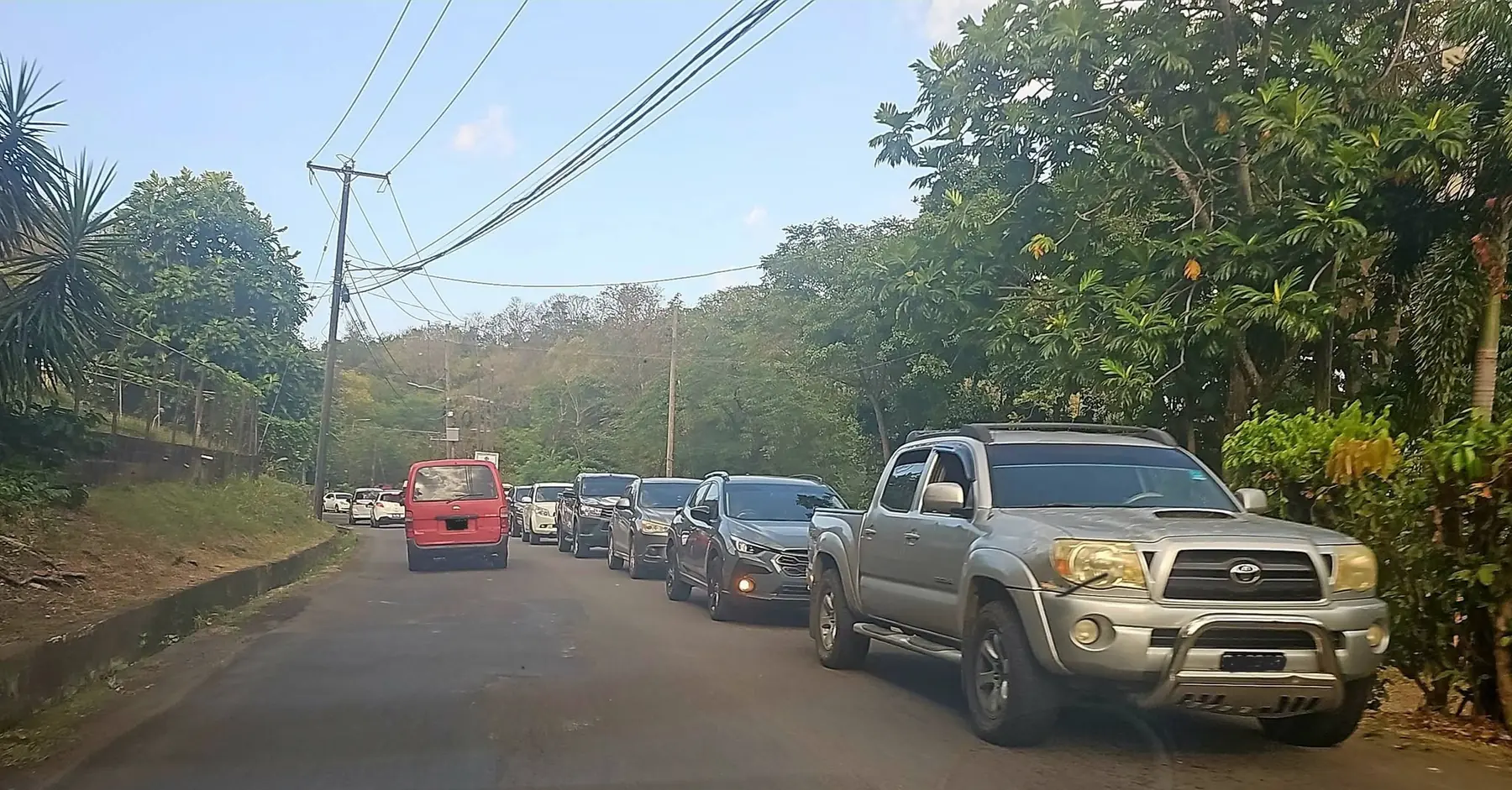
Saint Lucia should begin with the places where a small error can leave someone dead or permanently injured: school walking routes, village crossings, sharp bends and roadside works. Pair quick, professionally designed repairs with lawful enforcement, affordable protective equipment and better emergency care. A public message can ask for care. A well-designed road helps that care succeed.
The immediate recommendation is a joint school-route and worksite inspection within seven days of authorisation, a reconciled injury register within 30 days, and a first set of engineered safety zones within 90 days. These are SLPA proposals. The responsible agencies should cost the actual sites and publish a funding ceiling before procurement.
Congestion and safety must be handled together. Give buses safe places to stop, keep pedestrians out of live traffic, and measure the whole journey. The linked congestion brief sets out a bounded north–Castries pilot that can be revised before government makes larger commitments.
September review adds current reporting, corrects incompatible statistical comparisons and applies SLPA’s published decision frameworks. All proposed deadlines run from programme authorisation.
At least 18 is SLPA’s provisional minimum, assembled from a July police-attributed count and two later August deaths. A complete September national total has not been verified.
Remember what happened at Cas En Bas.
On Friday 18 September, two Entrepôt Secondary School pupils were seriously injured in a collision at Cas En Bas. By Monday, their school community had gathered to support them. Principal Arthur Scott said both had moved from intensive care to a general ward. That is welcome news. Recovery can still be a long road for a child and a family.
The policy question begins with the walk home. A school safety inspection should follow the routes children use from bus stops and nearby homes, even when those routes are far from the school gate. We should ask where a child can stand, where a driver can see them, and what happens when two vehicles meet beside a narrow walking space. The collision report does not establish cause or fault. It does give us a reason to inspect without delay.
“We have to be looking out for each other.”
Arthur Scott, Entrepôt Secondary School principal, quoted by St. Lucia Times, 21 September 2026.
Sources: St. Lucia Times [SR1]
Count people carefully, and count the harm after survival.
The Voice’s 29 July report distinguished 13 fatal collisions from 16 people killed. Two later deaths were separately reported in August. SLPA therefore records a provisional minimum of 18 for 2026 in the evidence reviewed on 23 September. That is a lower bound assembled from public reporting. It is not a newly issued police total, and it cannot tell us that no further deaths occurred.
Our incident list now matches 14 deaths to 12 events. Four deaths within the July anchor remain unmatched. We have removed the earlier annualised projection and the comparison with a 2025 figure reported as fatal collisions. A collision can kill more than one person. Those numbers cannot be exchanged.
The register should also link serious injuries to hospital care, rehabilitation and return to school or work. Publish anonymous totals, with a clear 30-day death definition and a stated injury classification. Keep unresolved vehicle-related deaths in a separate reconciliation queue until the responsible agencies settle their statistical classification. Families should not disappear from the record because the paperwork crosses departments.
Sources: The Voice [SR2]St. Lucia Times [SR3]
A repaired road needs a safety check too.
Just before the review week, Kenson Casimir raised concerns about speeding following road improvements around Riviere Mitan, Desrameaux and Morne Citon. He also described requests for speed bumps along Masade–Cap Estate. The concern is useful. Potholes cannot be the country’s speed-management system. Good surfacing should arrive with good decisions about speed, visibility and walking space.
Use low-speed zones at places where people regularly cross or walk close to traffic. A 30 km/h design is a sensible starting point for a school, market or village setting, subject to engineering and lawful signage. It is not a blanket prescription for every highway. Raised crossings, narrower entries and protected footways can help; the choice depends on slope, drainage, buses, ambulances and access for people with disabilities. An improvised hump can create a new hazard.
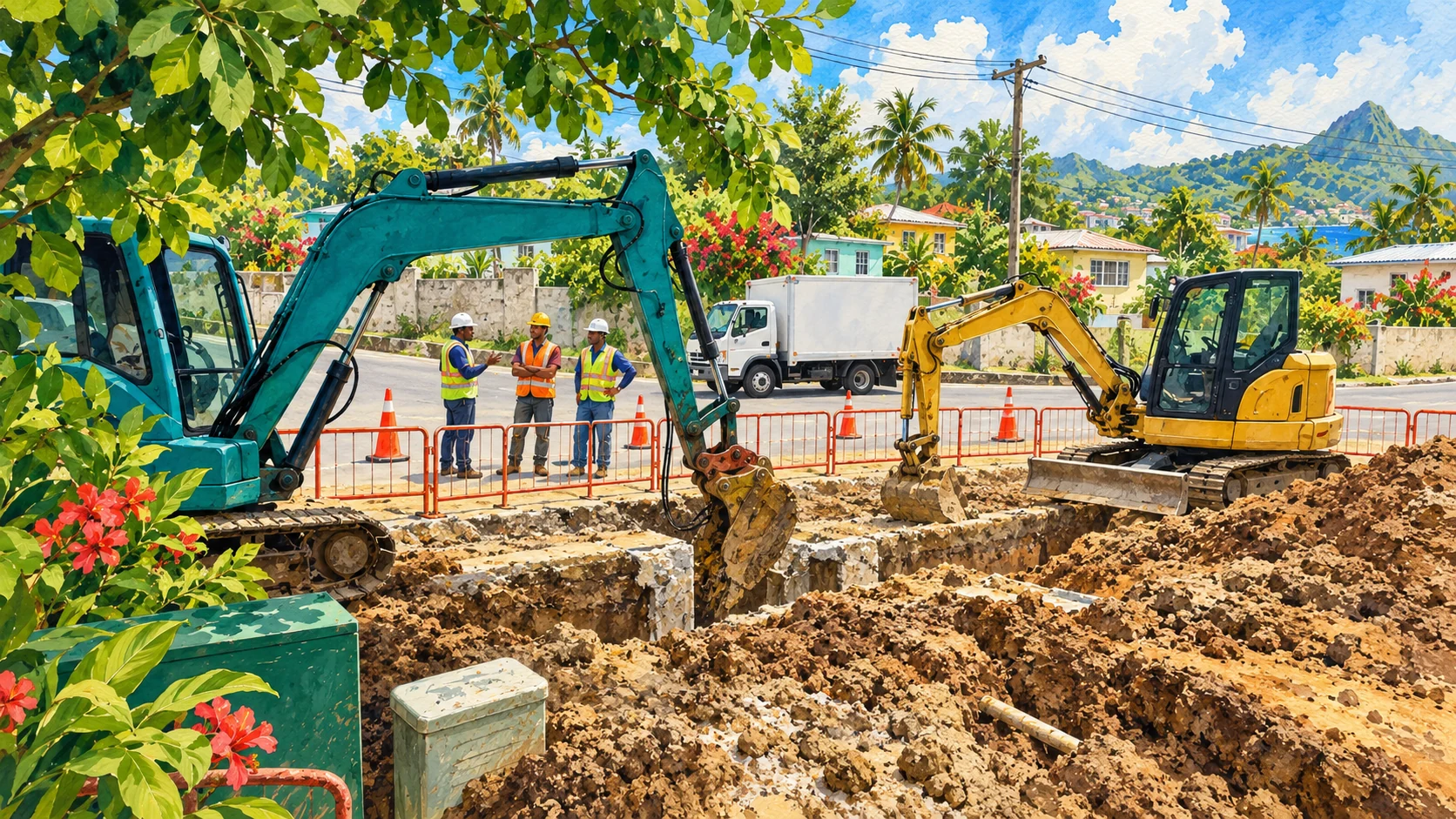
The August Malgretoute scooter collision involved a parked backhoe. Parked construction vehicles also appear in the Cas En Bas account. These reports do not establish one shared cause or illegal parking. They justify checking how equipment is stored, whether people have a continuous protected route, and whether obstacles are visible at night. Require a contractor’s traffic plan and a named person who can correct an unsafe arrangement immediately.
Sources: St. Lucia Times [SR4]St. Lucia Times [SR3]St. Lucia Times [SR1]World Health Organization [SR8]World Health Organization / United Nations [SR9]
Switzerland: make the bend easier to read.
At the Seilkurve hairpin on Switzerland’s Brünig Pass, the bend tightens in a way that is hard to see on approach. The Federal Roads Office added graduated circular markings near the centreline in September 2022. It also improved grip on covers in riding lines, protected some barrier undersides and covered sharp roadside fittings. This is a useful model of safety work: find the particular hazard and change it.
The early Swiss observations found additional braking among 4% of motorcyclists after the markings. The earlier figure of about 80% covered road users generally, so it cannot be used to calculate a rider-specific reduction. The account shows a promising behavioural result, not a proven reduction in motorcycle deaths. It was first published in 2023 and republished in 2025.
Luxembourg’s N25 project likewise monitored riding position before and after special markings. A later project presentation also records rejecting a proposed treatment on the CR134 because the road was too narrow. That decision matters for Saint Lucia. Our proposal is a trial at one or two suitable bends after checks on wet grip, usable lane width, visibility and maintenance. Redesign for left-side driving. Do not simply copy the European paint pattern.
Sources: Swiss Federal Roads Office [SR11]Luxembourg Public Works [SR12]Luxembourg road authority / Mangen and Winkelbauer [SR13]
Give riders a safer road and a safer purchase.
Begin with hazards that matter to a rider: loose aggregate after works, slippery covers, abrupt edges, poor bend guidance, dangerous roadside hardware and vehicles turning across their path. Inspect priority bends with road engineers and experienced riders. Maintain grip and clear sight lines. Any barrier treatment must be designed for the site and kept clear of drainage and pedestrians.
Antilock brakes deserve a place in buyer guidance and public procurement. A US study comparing 65 motorcycle models found a 22% lower fatal-crash involvement rate associated with antilock brakes. It was an observational study, so rider selection and distance travelled remain limits. Singapore has announced a requirement for newly registered motorcycles from April 2027. That future rule is useful policy design, not evidence of an effect already achieved.
For Saint Lucia, first examine import costs, model availability and how compliance would be checked. Consider a phased new-registration standard only after that review. Do not demand unsuitable retrofits from current owners. In parallel, check certified helmet availability, fit and fastening, passenger coverage, tyre condition, brakes and hazard-focused instruction. A training course should not be sold as proof that a person can safely compensate for a badly designed road.
Sources: Insurance Institute for Highway Safety / Eric Teoh [SR7]Singapore Land Transport Authority [SR10]
Responsibility has to reach beyond the driver.
As Philip J. Pierre said in July, in the words reported by The Voice, the country can act against recklessness. The same duty reaches road designers, works contractors, vehicle inspectors and public agencies. Each controls part of the risk that a driver or pedestrian meets.
A practical programme needs one accountable delivery lead and separate professional duties. Infrastructure manages road treatments. Transport handles standards and operator arrangements. Police lead investigations and lawful enforcement. Health measures rescue, care and rehabilitation. Statistics reconciles definitions. Review the first sites together every fortnight, and publish what has actually changed.
A three-month period without a death would be welcome, but would not prove the pilot caused it. Look first for lower dangerous speeds, safer crossing behaviour, fewer observed conflicts and dependable emergency access. Compare with similar untreated sites where feasible, then follow injuries over a longer period. Select sites using several years of harm and current exposure so an unusually bad month does not manufacture an apparent improvement.
“we can emancipate ourselves from recklessness. We can emancipate ourselves from carelessness on the roads.”
Prime Minister Philip J. Pierre, quoted by The Voice, 29 July 2026.
Sources: The Voice [SR2]
Key findings
The new Gros Islet responsibility is a useful starting point.
The Voice reports that district traffic management and collision investigation resumed on 15 September, with national coordination retained in Castries. Pair that organisational change with a visible baseline and fortnightly results. A new responsibility needs staff, equipment and a working handover.
Evidence-led finding · Source SR5Keep recovery in the safety budget.
A serious injury can interrupt schooling, paid work and unpaid care. SLPA proposes a consent-based pathway from hospital discharge to rehabilitation and school or workplace support. Publish service waits and access gaps, never identifiable medical files.
Evidence-led finding · Source SR1Control speed through a complete treatment.
Use lawful limits, road design, safe crossing space and appropriate enforcement together. Inspect the approaches and nearby streets so a safer crossing does not push danger around the corner.
Evidence-led finding · Source SR8, Source SR9What can travel to Saint LuciaBorrow the mechanism, then test the local result.Evidence is strongest when the treatment, measurement and limits are visible. A successful country’s reputation is not a local effect estimate.2 cases
The transport authority reported about 80% fewer older-pedestrian crashes at completed zones in its 2020 account.
- What produced it
- Treat crossings and approaches together with traffic calming and features suited to older residents.
- Use in Saint Lucia
- Begin with a few school, market and clinic areas. Check the route with residents, wheelchair users and bus operators.
- Boundary
- Agency before/after report without a disclosed comparison group. Do not promise an 80% reduction here.
Before-and-after measurements found roughly 30–50% speed reductions at the centres of treated zones.
- What produced it
- Raised tables, humps, pinch points, surfacing and rumble strips were compared with spot-speed and community evidence; raised crossings and pinch points performed well where people crossed.
- Use in Saint Lucia
- Pilot 30 km/h school, market and village zones at geocoded high-risk sites; publish 85th-percentile speeds, yielding, crashes and ambulance or bus effects at baseline, three and twelve months.
- Boundary
- This was a small speed study, not an injury trial. Drainage, noise, emergency access and speed rebound outside the treatment require local testing.
How the SLPA frameworks change the decision
Act now on a bounded programme, and make expansion earn its place.
These are reasoning tools, not proof that a proposal will work. Each tool exposes a different possible failure.Institutional Intervention ReadinessProtect existing functionsKeep access and rescue working
Map who uses each space before moving a stop or closing a lane. A replacement route must work for children, disabled passengers, deliveries and emergency vehicles before the old arrangement is removed.
RIPPLE-4Follow the consequencesLook beyond the treated site
Trace the direct speed change, driver route changes, effects on bus reliability and household time, and the maintenance duties inherited next year. Watch side roads and avoid counting the same saved time twice.
Sovereign Option TheoryStage commitmentBuy learning and useful safety together
Begin with reversible, maintained treatments. Release more funding only after safety, access, cost and delivery gates pass. Retain authority to change a treatment that creates new risk.
Logic EngineTest the inferenceA sequence is not a verdict
A crash report does not establish blame. A drop after treatment does not establish its cause. Record rival explanations, units, dates and the evidence that would change the conclusion.
Dated public reconstruction
Four deaths in the July anchor still need incident-level matching.
people killed16 police-attributed deaths in July plus two later August deaths = a provisional minimum of 18. This is not a complete September national count.
Use this data
Copy the visible figures or download them with the unit, claim label and method note attached.
SLPA policy proposal
Safe Roads 90: Fatal-Injury Ledger and Corridor Programme
Make deaths and serious injuries the public result, then combine reliable data, rapid engineering, lawful enforcement, safe vehicles and faster rescue where the evidence shows the greatest risk.
One fatal-injury ledger
Link police, health, coroner and CSO records using a 30-day road-death definition and a disclosed serious-injury standard.
Three corridor treatments
Audit the first three high-risk corridors by day and night, control urgent hazards and publish before-and-after measures.
Lawful targeted enforcement
Use verified devices, calibration, grounds and evidence rules; prohibit revenue, ticket and arrest quotas.
Inspection integrity
Audit authorised inspectors and garages, close critical defects lawfully and provide written reasons and reinspection routes.
Rescue and trauma performance
Measure emergency response, extrication and hospital handoff, then test the system in a multi-casualty exercise.
Delivery sequence
Build the baseline and choose the corridors
- Publish the charter, owners, budget ceiling, definitions and de-identified 2025–26 ledger.
- Audit the first three evidence-selected corridors by day and night.
- Complete the device, demerit, BAC, inspection and automated-enforcement legal audit.
- Publish the EMS and authorised-inspector baselines.
Treat hazards and prove the operating chain
- Install quick-build treatments and measure speeds before and after.
- Run targeted lawful speed, impairment, helmet and belt operations without quotas.
- Pilot digital serious-crash and property-only reporting.
- Complete a mass-casualty exercise and publish the first dashboard and spending map.
Scale only what works
- Complete medium corridor works where the evidence supports them.
- Establish permanent fatal and serious-injury review and inspector-integrity sampling.
- Table any necessary child-restraint, novice-driver, demerit or automation amendments.
- Commission an independent process and outcome evaluation.
Responsible institutionsRoad safety crosses transport, roads, police, health and statistics.One minister cannot deliver every link; one public result still needs a named operating chain.6 owners

Owns the transport result and the relationship to the Road Transport Board and department.

Owns corridor audits, urgent hazard control and permanent road works.

Provides home-affairs policy direction without replacing operational police command.
Owns police crash records, evidence-led enforcement and the independent criminal-investigation lane.

Owns trauma-service performance and health data participation.
Owns publication methods for the reconciled statistical series and its quality note.
The current Road Traffic commander was not confirmed from a 2026 primary record. Operational accountability remains with the office and Commissioner until confirmed.
Public accountabilityMeasures for public accountabilityQuarterly operating signals and one independently reviewed annual outcome report.6 measures
Tracks the public result and who is exposed.
Shows whether the corridor design changed dangerous operating speeds.
Tests the speed of the infrastructure response.
Provides a leading safety measure before annual fatality totals settle.
Tests the survival chain after a crash.
Detects ineffective or inequitable enforcement.
04Limits, uncertainty & sources4 limits · 23 sources
Limits of this analysis
- The provisional minimum of 18 is not an official year-to-date total. It combines a July police-attributed anchor with two distinct August events; later deaths may be missing.
- The existing January–July line list is retained, not presented as a newly independent audit. Four deaths within that anchor remain unmatched. Other vehicle-related deaths may require classification.
- Case reports establish events, not findings of fault. The source reports do not establish identical causes at Cas En Bas and Malgretoute.
- International effects are not forecasts for Saint Lucia. Short pilots need longer injury follow-up, exposure measures and comparison sites. No new cost estimate or approved allocation is claimed.
Images provide context; findings come from the cited records.