Research/Current evidence dossier

Canelles Resort · CIP case study · 5 August 2026

Canelles Resort.What is known. What remains unresolved.

Canelles is a real, substantially delayed development. It is not a paper fiction and not a completed success. The CIU recorded major real-estate fee income while Canelles was the route producing applications, but no published project-level account links completed purchases, escrow deposits, authorised draws, construction and the remaining balance.

Current verdictReal construction. Material funding. Severe delay. No public proof of diversion located. Insufficient public accounting.
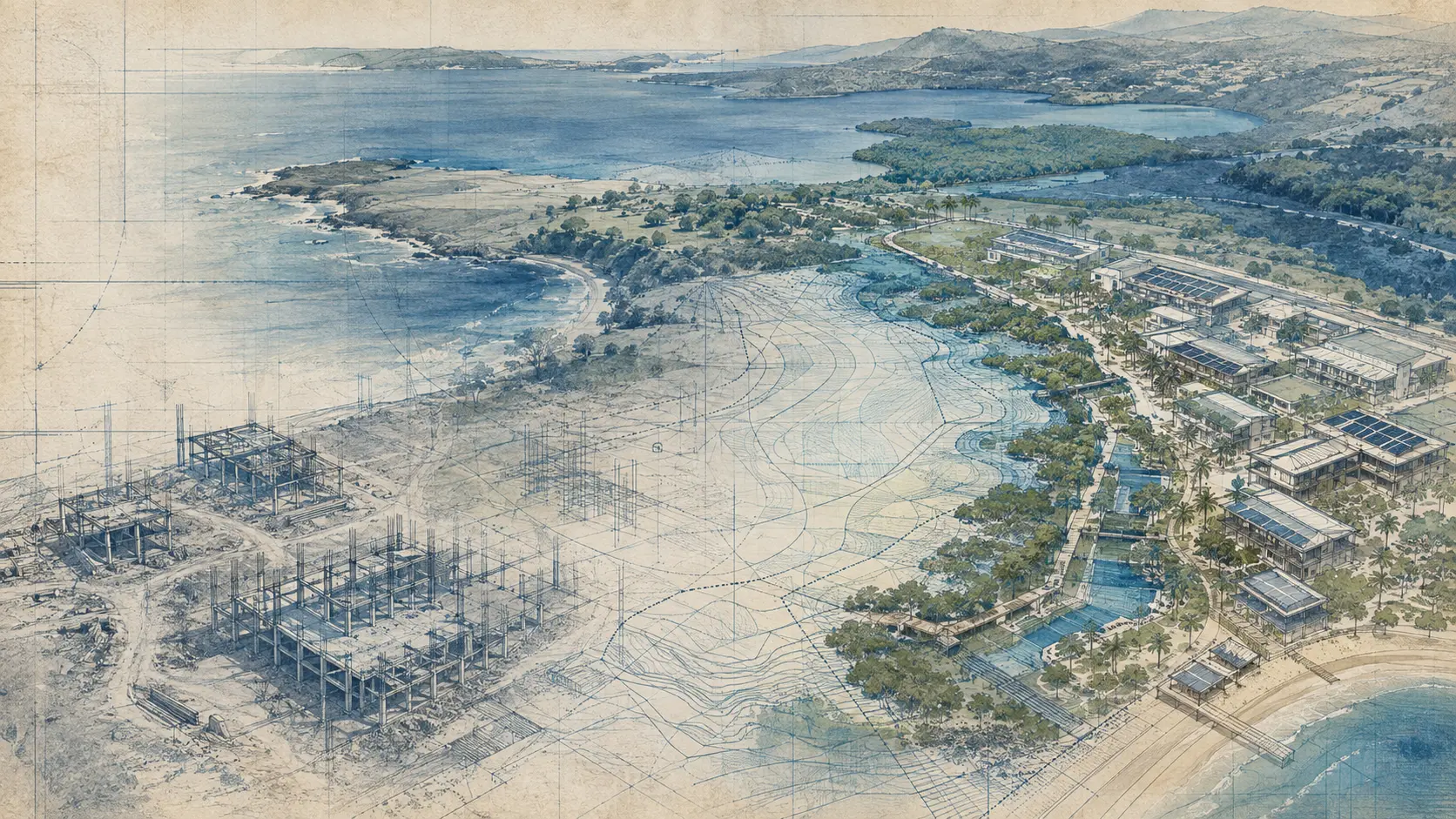
Conceptual cyanotype showing incomplete coastal frames transitioning into a planned, landscape-integrated development
SLPA concept illustration based on supplied site photographs.
Latest official construction recordResumedDreams component · Q3 2025
Hotel openingNot verifiedno official opening found by 5 Aug 2026
Named escrow disclosureEC$142.67mFY2022/23 only, not a cumulative total
Project-level reconciliationNot publisheddeposits → draws → work → balance

The 60-second finding

What the public record proves, and what it cannot prove.

The public record does not prove that Canelles funds were stolen or diverted. It also does not provide enough information to demonstrate that all qualifying principal was received at full economic value, released against proper milestones and converted into a finishable asset.

01 · What is established

A formal project produced real structures, public fees and some documented escrow funding.

Successive governments treated Canelles as approved; investors were processed; the CIU recorded material real-estate administration fees, and the site contains substantial incomplete construction.

02 · What went wrong

Delivery targets failed while the publicly visible project-money trail stopped at the escrow boundary.

The project was not gazetted as required, key agreements stayed unpublished, work stopped for extended periods, and annual reporting did not reconcile approvals, deposits, draws, work and balance.

03 · What is not proved

Delay and opacity are not, by themselves, proof of fraud or a missing EC$800 million.

The larger number is a conditional minimum-value estimate, not audited cash. Courts have not found diversion or underselling on the public record reviewed.

04 · What should happen

Reconcile the legacy project, finish or restructure it, and change the development model.

Saint Lucia should apply direct escrow control, certified draws and cost-to-complete tests now. Future projects can use locally controlled companies to retain more ownership, margin, skills and bargaining power.

Status now

The last official record shows resumed work, but no verified opening or full public project account.

“Resumed” is an activity status, not a completion percentage. “Fully subscribed” is a sales status, not proof that every approval settled or every dollar remains available.

WatchPhysical construction
Resumed; completion unverified
Last verified
Government’s 2025 Economic and Social Review says Dreams/Canelles was suspended in H1 2025 and resumed in Q3.
Still needed
Current pace, percentage complete, structural condition, certified spend and cost to finish.
Open supporting source ↗
UnresolvedHotel opening
Not verified open
Last verified
The developer’s end-2025 target was missed. In April 2026, Minister Ernest Hilaire described late-2026/early-2027 as the goal government was pushing toward.
Still needed
Commissioning plan, opening date, booking inventory and occupancy certificates.
Open supporting source ↗
ConfirmedCIP sales status
Fully subscribed
Last verified
Government said in May 2024 that all Canelles shares had been sold; the CIU now labels the route fully subscribed.
Still needed
How many approvals became completed purchases, titles, lapses, withdrawals or refunds.
Open supporting source ↗
WatchProject money
Material funding; full trail missing
Last verified
The FY2022/23 annual report records US$52.842m deposited into Canelles escrow in that year.
Still needed
Cumulative deposits, withdrawals, payees, refunds, closing balance and construction assets produced.
Open supporting source ↗
ConfirmedPublic fee income
Substantial and largely audited
Last verified
Published annual-report figures total EC$312.525m. EC$312.174m from FY2020/21 through FY2024/25 appears in audited financial-statement line items; the earlier EC$351,000 appears in a management-series chart.
Still needed
A project-specific allocation of pooled CIU distributions and the net fiscal value after all programme costs.
Open supporting source ↗
WatchLegal merits
No final merits finding located
Last verified
The High Court refused an interim injunction in October 2025 and found the underselling evidence then before it speculative.
Still needed
The outcome of the substantive claim and any investigation referenced in the affidavits.
Open supporting source ↗
WatchDeveloper status
Active in the 2025 record; current capacity unverified
Last verified
Caribbean Galaxy participated in 2025 court proceedings, and government recorded resumed site activity.
Still needed
Current registry good standing, beneficial ownership, solvency, audited project accounts and contractor capacity.
Open supporting source ↗
UnresolvedBrand / operator
Historic relationship; current commitment unknown
Last verified
Official and promotional records associated Dreams and Zoëtry/AMResorts with the development.
Still needed
A current Canelles-specific Hyatt/brand management confirmation and its conditions.
Open supporting source ↗
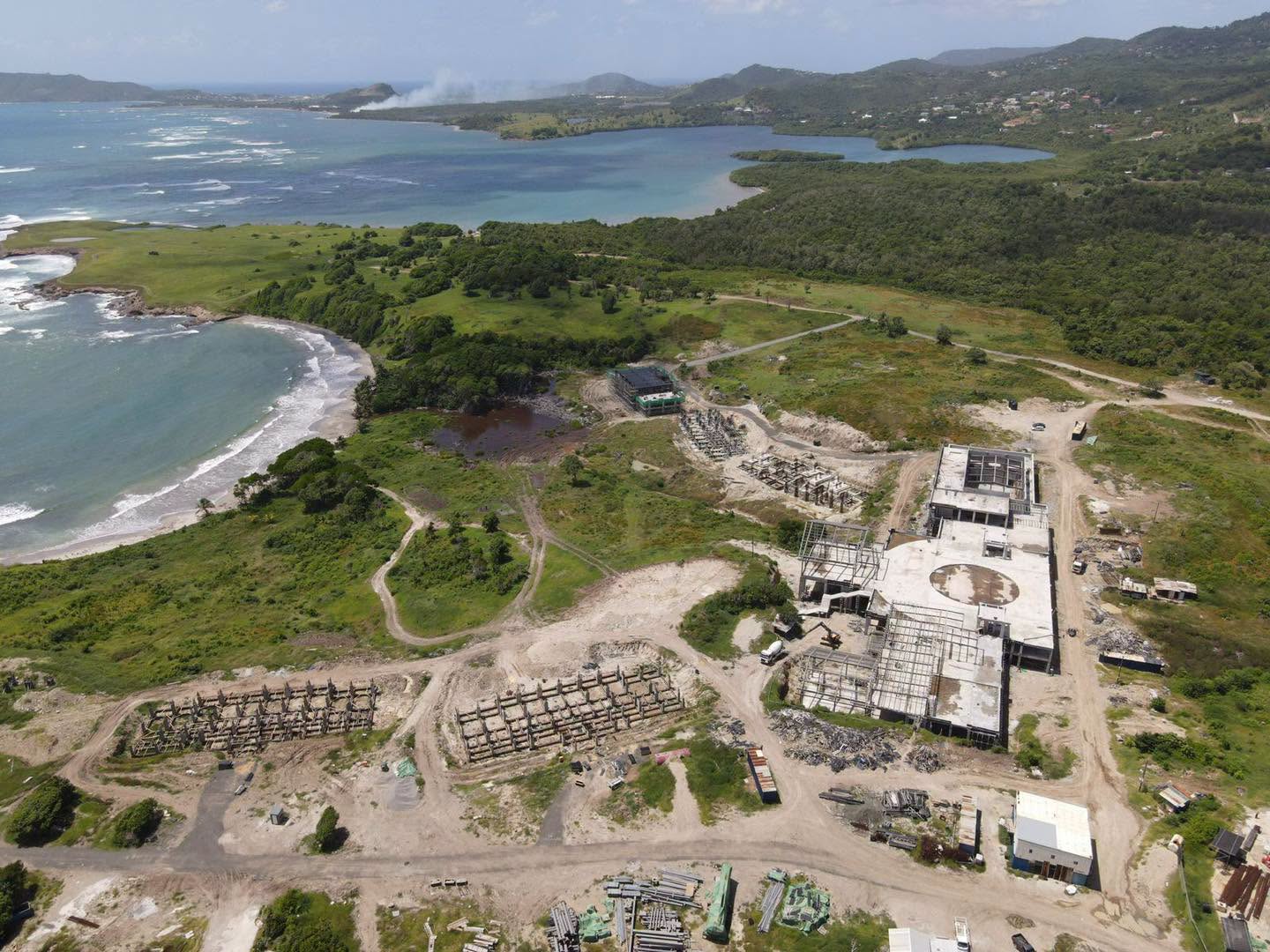
Submitted aerial photograph showing incomplete concrete buildings, stored components and graded roads at the coastal Canelles site
Submitted aerial photograph · original date unverified. Shows partially constructed buildings.
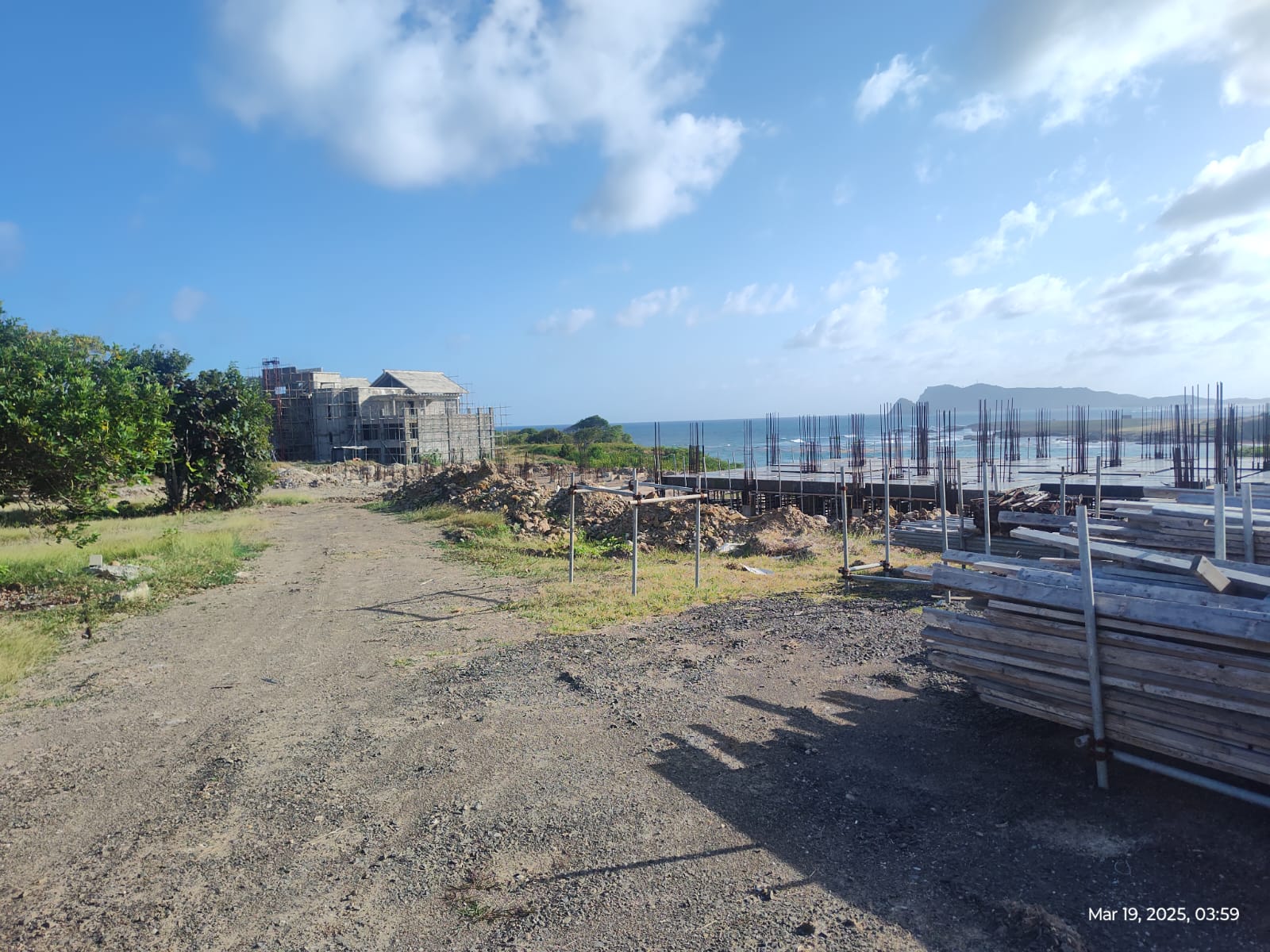
Ground-level Canelles photograph with incomplete concrete structures, exposed reinforcement and stacked formwork
Submitted ground photograph · embedded timestamp 19 March 2025. Authorship and metadata remain unverified; the visible construction is consistent with the official H1 2025 suspension.

How the real-estate route records each event

An application, an approval, a purchase and citizenship are not the same event.

They use different units and occur at different gates. A file can also contain a principal applicant and dependants, so person counts can exceed file counts. Citizenship and hotel completion then continue on different clocks.

Five distinct recordsSelect a state to see what it proves.

Process order only; linked Canelles conversion rates are unavailable.

What it means

The applicant may complete the qualifying investment within the allowed period.

Scope

A completed purchase or proof that cash reached escrow.

Record needed

Decision date, applicable statutory price, conditions, expiry and any extension.

Counting rule: applications ≠ approvals ≠ completed purchases ≠ citizenship grants ≠ passports.

Inspect the full seven-stage processApplication → project draws
  1. 01
    Application and fees

    A licensed agent submits the file. Due-diligence and applicable administration fees are paid to the programme; these are separate from the hotel investment.

  2. 02
    Board decision

    The Board approves, denies or seeks further information on the application. An approval is not the same event as a settled property purchase.

  3. 03
    Qualifying investment

    After approval, the applicant must pay the applicable qualifying amount within the statutory period, unless extended.

  4. 04
    Escrow confirmation

    For Canelles, officials say the escrow agent confirmed the statutory minimum before the citizenship certificate issued.

  5. 05
    Citizenship

    Once all requirements are met, the applicant becomes a citizen. The passport is not ordinarily held back until the hotel opens.

  6. 06
    Five-year hold

    The qualifying interest must be held for the statutory period. That protects the formal investment holding; it is not a government completion guarantee.

  7. 07
    Project draws

    Escrow releases then follow the development and escrow agreements. This is where construction milestones, cost-to-complete and independent control matter.

Investor’s objectiveApproval → qualifying payment → citizenship
National objectiveCapital → construction → commissioned, productive asset

Perverse incentive risk: if the first clock completes while the second stays weakly monitored, the applicant has the desired citizenship, the developer may have access to capital, and government has received fees. Construction, investor-remedy and national-benefit risks remain.

Where did the money go?

CIP project payments, CIU fees and resort income are separate money streams.

Most of the public-fee series appears in audited CIU accounts. The qualifying principal was project capital, not ordinary Treasury revenue; its full source-to-use trail is not public.

Stream A · Completion-protective principal path

Applicant → independent escrow → certified draws → development

The statutory real-estate amount was intended to finance the project. Before release it was custody capital; after release it was developer/project capital. Citizenship made the sale possible, but the principal was not ordinarily an NEF donation.

Public answer: one annual deposit figure; cumulative use unresolved.
Stream B · Programme fees

Applicant → CIU → programme costs, surplus and public distributions

Administration and due-diligence fees were separate, non-refundable public-programme receipts. They are meaningful economic benefits, though due-diligence revenue also funds external vetting and other programme costs.

Public answer: the route-level series is published, and most of it appears in audited accounts.
Stream C · Operating value

Finished resort → jobs, procurement, taxes, exports and local ownership

This is where the long-run development case should be won. Public claims projected hundreds of jobs, but realised Canelles payroll, local purchases, taxes and community benefits have not been published.

Public answer: expected benefits; outcome evidence missing.
Three different measures

The three headline figures measure different things.

Definitions and periods differ; compare each figure within its own record type.

Conditional estimate, not received cash

EC$805.68mHow large could qualifying purchase value have been under the stated assumptions?

What the statutory minimum value would total if every disclosed approval became a completed qualifying purchase.

This conditional estimate uses 75 earlier Canelles grants plus 1,367 later disclosed approvals, allocated to the lowest legally possible price periods. It is not proof that the same cash entered escrow.

  1. 01Disclosed approvalsReported
  2. 02Applicable legal minimumLegal input
  3. 03Conditional estimateSLPA calculation
  4. 04Cash receivedNot established
Includes
Statutory qualifying principal implied by disclosed approvals, assuming every purchase completed.
Excluded from this measure
Lapsed files, extensions, refunds, family fees, financing, escrow releases and actual settled receipts.
Analytical postureUseful for sizing the exposure. Insufficient for saying money was received or lost.

Together, the figures show reported fees, escrow disclosure and conditional project value; a full project reconciliation is still required.

Scale of immediate fees

Not US$100. Often tens of thousands per application.

Illustrations use the published Canelles-period real-estate administration schedule and due-diligence fees. EC conversions use the fixed US$1 = EC$2.70 rate.

Illustrative non-refundable public-programme fees, excluding the qualifying principal and private legal, agent, marketing or property charges
HouseholdAdministrationDue diligenceTotal US$Total EC$
Applicant aloneUS$30,000US$8,000US$38,000EC$102,600
Applicant + spouseUS$45,000US$13,000US$58,000EC$156,600
Couple + 2 children under 16US$55,000US$13,000US$68,000EC$183,600
Couple + 2 adult dependantsUS$65,000US$23,000US$88,000EC$237,600

The then-applicable Schedule expressly excluded the ordinary US$2,000/US$1,000 processing fee from the real-estate route. Family composition changes the total. These examples are not a Canelles receipt audit.

Source-to-use reconciliation

The records a complete project account must connect.

A clean audit of CIU fees cannot answer a project-funds question. Each project record needs the same pseudonymous file key.

Audit questionCan each approved file be traced from price to payment, release, asset and present right?One pseudonymous file ID across all five ledgers.
  1. 01Same pseudonymous file IDApproval

    File ID · approval date · applicable price · completion, lapse or withdrawal · certificate date

  2. 02Same pseudonymous file IDInvestor funds

    Originating account · economic source · settled amount · loans, rebates or side letters · refunds

  3. 03Same pseudonymous file IDEscrow

    Opening balance · deposits · interest · releases and reversals · payees and fees · closing balance

  4. 04Same pseudonymous file IDConstruction

    Draw request · independent certificate · invoice · contractor and related party · asset produced

  5. 05Same pseudonymous file IDTitle & remedy

    Interest issued · registration or encumbrance · hold or transfer · refund or dispute · present rights

Escrow accountOpening balance + deposits + interest − verified draws − refunds − fees = closing balance

Asset testVerified draw ↔ invoice ↔ independent certificate ↔ physical asset

Proposed reconciliation design for future reporting.

Escrow design and control

Escrow protects a project only when releases are independently controlled.

An escrow can be a robust completion-control system or little more than a momentary balance check. The agreement, economic source test, signatories, release conditions and remedies determine which one it is.

Completion-protective design

Applicant pays escrow directly.

  • Independent, conflict-free regulated agent
  • Originating investor and beneficial source traced
  • Regulator has direct read access
  • Dual authorisation; no developer sole control
  • Independent engineer certifies each milestone
  • Cost-to-complete test before every draw
  • Retainage, bond, freeze and step-in remedies
  • Quarterly aggregate public reconciliation
Risk-exposed design

Developer handles the money before the control.

  • Applicant makes one payment to developer
  • Developer undertakes to place minimum in escrow
  • Bank statement substitutes for source tracing
  • Developer is sole signatory or controls release
  • Release conditions are broad or unpublished
  • No independent cost-to-complete confirmation
  • Sales continue after stalled milestones
  • No public deposit-to-asset reconciliation
Which risk-exposed features are documented?

The public record shows a developer-first payment feature, but not the complete contract.

A 2023 industry report reproduced clauses saying the investor paid the developer once and the developer undertook to place the statutory minimum in escrow on the investor’s behalf. Galaxy said government received statements directly from an independent escrow agent and that Saint Lucian banks had declined the service. Minister Hilaire later described a Hong Kong escrow with Galaxy as sole signatory.

Defensible conclusion: the design created a source-verification and control risk. The reviewed evidence does not prove Galaxy exploited that risk, and the full escrow agreement is not public.

Read the reported document review and Galaxy response ↗
Term

Escrow

A custody arrangement governed by release conditions. It protects completion only if those conditions, signatories and remedies are designed to do so.

Term

Perverse incentive

A rule that rewards behaviour opposite to the policy goal. One example is delivering citizenship and public fees before verified hotel completion while construction controls remain weak.

Term

Moral hazard

A party can take more risk because another party bears much of the loss. It is a design diagnosis, not an allegation of dishonesty.

Term

Regulatory forbearance

A regulator delays or softens enforcement to preserve the chance of eventual delivery. Sometimes rational; dangerous without dated triggers and an exit plan.

Term

Local value capture

The share of spending, ownership, skills, profits, taxes and productive capacity that remains in Saint Lucia after the project is built and operated.

Term

Residual ownership

Who owns the remaining asset value and upside after contractors, lenders and other claims are paid.

Audit-style chronology

How Canelles moved from approval to prolonged delay and partial resumption.

Because the sequence spans UWP and SLP administrations, accountability should follow the institutions, agreements and decisions across the full period.

  1. 01
    Agreement

    Government and Caribbean Galaxy signed the original development agreement. The full agreement is not public.

  2. 02
    CIP approval

    The High Court records that approval of Canelles as a qualifying real-estate project was communicated. The Board later acknowledged the required Gazette publication was omitted.

  3. 03
    Groundbreaking

    Government and Galaxy broke ground. The developer forecast completion in two to three years, approximately 2022–23.

  4. 04
    Delivery pressure

    The incoming administration later said it pressed Galaxy over slow progress: useful evidence that delay was recognised rather than ignored.

  5. 05
    Replacement agreement

    The Board and Galaxy made “significant changes” to the 2018 agreement. The replacement text and inventory schedule remain unpublished.

  6. 06
    Named escrow flow

    The CIU reported US$52.842m deposited into Canelles escrow. The 2023 economic review reported activity on three of nine planned buildings.

  7. 07
    Fully sold

    Government said all shares were sold and Canelles was no longer an available CIP option; the developer signalled end-2025 completion.

  8. 08
    Work halted

    The official 2024 review says work on Dreams and Zoëtry continued in H1 and then came to a halt.

  9. 09
    Separate agreement ended

    Government terminated Galaxy’s National Infrastructure Improvement enterprise agreement, not the Canelles real-estate agreement.

  10. 10
    Dreams work resumed

    The official 2025 review records renewed construction after a continued first-half suspension. It gives no parallel update for Zoëtry or the residences.

  11. 11
    Interim ruling

    The High Court refused an injunction on the preliminary evidence without deciding the substantive allegations on their merits.

  12. 12
    Stronger statute

    Act 22 of 2025 came into force, adding clearer development-agreement, escrow-reporting and oversight requirements.

  13. 13
    Stronger regulations

    S.I. 57 added independent escrow-agent requirements, written draw terms and an annual approval cap, while preserving a legacy-backlog carve-out.

  14. 14
    New target

    Minister Hilaire said government was pushing to open Canelles by late 2026 or early 2027. This is an aspiration, not a verified construction programme.

  15. 15
    Research cutoff

    No official completion, opening, booking or final-account announcement was located.

Accountability without overclaiming

Confirmed progress and unresolved evidence gaps.

Sharp scrutiny is most credible when it recognises useful disclosure and reform. This is not a verdict on personal motives.

01

Tangible construction

Canelles is not merely a marketing page. Official reviews and supplied photographs show material physical work, even though the asset remains incomplete.

02

Public fee reporting

CIU annual reports provide a substantial real-estate administration-fee series. EC$312.174m from FY2020/21 through FY2024/25 appears in audited financial-statement line items; the earlier EC$351,000 appears in a management-series chart. Acting Chairman Julian Charles and CEO Mc Claude Emmanuel’s FY2024/25 report also disclosed an EC$86.15m programme-wide government distribution.

03

Project-specific disclosure

The FY2022/23 report’s US$52.842m Canelles escrow inflow is exactly the kind of project-level figure public reporting should restore and extend.

04

Named transparency

Minister Ernest Hilaire’s June 2024 disclosure that 1,367 of 2,047 approvals since July 2021 were Canelles files made a scale calculation possible.

05

Candid status reporting

The Government’s economic reviews recorded both the halt and the later resumption instead of presenting an uninterrupted promotional story.

06

Stronger future law

The 2025 Act and 2026 Regulations added escrow-agent independence, written draw terms, reporting and approval caps. These are real improvements, though legacy treatment and public disclosure still matter.

Land, coast and environment

Coastal development affects land, access, infrastructure and public costs for decades.

The 2020 Government release itself described environmental and archaeological sensitivity and possible effects on a marine reserve, fisheries and biodiversity. No indexed Canelles planning permission, EIA/EMP, amendment schedule or compliance report was located in this review.

That is an online disclosure gap, not proof the approvals do not exist. Publish the file, its conditions, coastal-setback and drainage design, water and wastewater plan, habitat protections, archaeological monitoring, climate standard and inspection record.

A locally controlled development company

Saint Lucia can buy global expertise without surrendering local control.

A locally controlled development company can buy world-class architecture, engineering, branding, construction management and marketing as separate services. Ownership and developer margin can remain locally held, and providers can remain replaceable.

Scenario 03 · Saint Lucia project company

Local control; global expertise bought as services

A Saint Lucian special-purpose company owns the development platform, hires an international brand, architect, EPC contractor and marketer separately, and keeps residual value at home.

SLPA illustrative design assessment. One means weak and five means strong on the named planning objective; the scores are editorial judgments, not measured outcomes.

Public control5 / 5
Local value5 / 5
Provider replaceability5 / 5
Auditability4 / 5
Capital route
Local sponsor equity, strategic investors, debt and capped citizenship-backed capital fund one published budget.
Control
Independent local board and professional managers; the CIU remains a regulator, not a shareholder.
Value retained
Developer margin, equity upside, supplier demand, skills and land-value gains can remain in Saint Lucia.
Failure mode
Patronage, undercapitalisation, political interference and local related-party capture.
Non-negotiable safeguardOpen procurement, beneficial-owner disclosure, independent directors, an audited SPV and a narrowly defined public golden share only if needed.
Conceptual policy blueprint of an unfinished coastal site transitioning into a locally governed, resilient development
Proposed development model. Local ownership and governance, competitively procured specialist services and built-in knowledge transfer.
Set up project governance before selling units

Ten steps to build a locally controlled project company.

  1. 01
    Fix the public purpose and site envelope.

    Publish land control, environmental constraints, phaseable scope, target market, infrastructure needs and the maximum acceptable public exposure.

  2. 02
    Create a ring-fenced Saint Lucian SPV.

    One project, one set of accounts, disclosed beneficial owners, independent directors and no unrelated borrowing or asset transfers.

  3. 03
    Separate regulator from owner.

    The CIU regulates; it should not own. A narrowly defined public golden share, if used, belongs in a separate holding entity with a published mandate and conflict rules.

  4. 04
    Procure capabilities separately.

    Run competitive processes for brand/operator, architect, environmental team, EPC contractor, quantity surveyor, marketer and facility manager.

  5. 05
    Put sponsor equity first.

    Founders and strategic investors absorb first loss before citizenship-linked draws. Require proof of equity, performance security and contingency.

  6. 06
    Cap citizenship inventory to need.

    Independent feasibility determines remaining net construction finance. Any scope or inventory increase triggers revaluation, reasons and public notice.

  7. 07
    Control every dollar and draw.

    Applicant-to-escrow transfer, direct regulator data, dual authorization, certified milestones, cost-to-complete and retention until commissioning.

  8. 08
    Contract local value.

    Set measurable Saint Lucian payroll, apprenticeships, professional services, supplier spend, agriculture, fisheries, arts and management-progression targets.

  9. 09
    Publish a quarterly project ledger.

    Units, approvals, deposits, releases, physical completion, cost to complete, local spend, environmental performance and remedies, all with audit scope stated.

  10. 10
    Design replacement before failure.

    Step-in, freeze, cure, contractor replacement, brand replacement, refinancing and investor remedy provisions preserve the national option.

Gross qualifying principal per completed purchase

Illustrative financing envelope

Illustrative approval ceiling592completed approvals, not applications or passports
Equity15%
Debt25%
CIP ceiling60%
Local equity at risk firstEC$120m
Verified commercial debtEC$200m
Citizenship-backed capital ceilingEC$480m
Targeted local procurementEC$320m
Public / community valueEC$24m

Budget − verified sponsor equity − verified commercial debt = maximum citizenship-backed funding need. Divide by net qualifying principal; never sell an unlimited inventory detached from cost to complete.

At these inputs, the illustrative CIP capital ceiling is EC$480m, equivalent to no more than 592 completed qualifying purchases at the selected gross statutory amount.

SLPA planning model, not a valuation or financing offer.Real projects must test net construction proceeds after finance costs, contingency, commissions, taxes, investor property value and operating working capital, then undergo independent feasibility and legal review.

A constructive 90-day response

The documents and decisions needed in the next 90 days.

The first objective is not punishment. It is a verified diagnosis: Is the asset structurally sound? Is enough money available to complete it? Who controls that money? What contractual route gives Saint Lucia the best chance of opening or orderly restructuring? Day 0 is the public commissioning of the review.

ClockLeadRequired output
0–30 daysCIP Board / responsible ministryPublish the 2018 and 2022 agreements, approved inventory and amendments with narrow redactions; identify the escrow institution, agent, jurisdiction, signatories and governing law.
0–30 daysAttorney General / CIP BoardExplain the Gazette omission and publish a legally grounded cure rather than treating publication as cosmetic.
0–45 daysIndependent auditor with direct bank accessBegin a source-to-escrow-to-project audit covering all relevant transactions across both administrations, every completed Canelles file and every draw.
0–60 daysIndependent engineer / quantity surveyorPublish verified physical completion, structural risks, certified work value, remaining scope and cost to complete.
0–60 daysDeveloper / project SPVPublish financing, developer equity, contractors, current brand/operator status, monthly programme and a long-stop date.
0–60 daysDCA and environmental authoritiesPublish planning permission, EIA/EMP, conditions, amendments, inspections and coastal or fisheries compliance records.
0–90 daysParliament / CIP BoardRelease an anonymised reconciliation and quarterly legacy-project dashboard, including exceptions and enforcement decisions.
0–90 daysGovernment and project partiesAdopt the 2025/26 safeguards contractually for Canelles where they do not already apply; establish retention, step-in and replacement-developer options.
Gate 1

Finish under monitored milestones

Use when audited funds plus committed finance can complete the asset, the structure is viable, and parties accept independent control.

Gate 2

Restructure and step in

Use when the asset is viable but the developer, contractor, brand or financing stack cannot deliver under the present arrangement.

Gate 3

Suspend, protect and recover

Use when financing is irreconcilable, completion is uneconomic, control access is refused or material legal/structural breaches cannot be cured.

Method, limits and sources

How this report separates fact, calculation, allegation and unknown.

Research cutoff: 5 August 2026. Sources were prioritised in this order: legislation and court records; audited/official reports; official statements; reported document reviews; allegations used only to identify questions.

Not obtained

The 2018 and 2022 development agreements, complete escrow agreement, bank statements, developer/SPV ledgers, construction draw certificates, title register, beneficial-ownership extract, current brand agreement, DCA/EIA file and cost-to-complete report.

What images cannot prove

Expenditure, ownership, fraud, compliance, structural integrity, present activity or permanent abandonment. They show visible conditions in a frame, subject to provenance limits.

Calculation rule

Applications, approvals, completed purchases, principal applicants, dependants, citizenship grants, certificates and passports are never treated as interchangeable.

Correction standard

Material corrections should preserve the prior claim, source the revised fact and update the cutoff. Send evidence to the editorial contact in the site footer.

Source ledger22 primary, reported and allegation recordsInspect sources
P1 · Primary

Canelles Resort Project begins

Government of Saint Lucia · 17 Jan 2020

Open source ↗
P2 · Primary

We Have No Business with Philippe Martinez

Government of Saint Lucia · 25 May 2024

Open source ↗
P3 · Primary

Economic and Social Review 2024

Government of Saint Lucia · 26 May 2025

Open source ↗
P4 · Primary

Economic and Social Review 2025

Government of Saint Lucia · 22 May 2026

Open source ↗
P5 · Primary

Annual reports and programme statistics

CIP Saint Lucia · FY2018/19–FY2024/25

Open source ↗
P6 · Primary

FY2022/23 annual report

CIP Saint Lucia · 2024 release

Open source ↗
P7 · Primary

FY2023/24 annual report

CIP Saint Lucia · 2025 release

Open source ↗
P8 · Primary

FY2024/25 annual report

CIP Saint Lucia · 2026 release

Open source ↗
P9 · Primary

Citizenship by Investment Act, section 36

Attorney General’s Chambers · Current revised law

Open source ↗
P10 · Primary

CIP Regulations, regulation 10

Attorney General’s Chambers · Current revised law

Open source ↗
P11 · Primary

Schedule 1 fee provisions

Attorney General’s Chambers · Current revised law

Open source ↗
P12 · Primary

S.I. 48 of 2019

CIP Saint Lucia · Escrow amendment

Open source ↗
P13 · Primary

Act 22 of 2025

CIP Saint Lucia · Effective 10 Nov 2025

Open source ↗
P15 · Primary

Allen Chastanet v Dr Ernest Hilaire et al.

Eastern Caribbean Supreme Court · 30 Oct 2025

Open source ↗
P16 · Primary

Saint Lucia: 2025 Article IV Consultation

IMF · 14 Jan 2026

Open source ↗
P17 · Primary

Misuse of Citizenship and Residency by Investment Programmes

FATF / OECD · Nov 2023

Open source ↗
P18 · Primary

Regional CBI memorandum implementation

OECS · 22 Jun 2024

Open source ↗
S1 · Reported document review

Off-island escrow accounts raise concerns

Investment Migration Insider · 18 Jun 2023

Open source ↗
S2 · Attributed statement

Better Days Ahead Say Tourism Minister

The Voice · 22 Apr 2026

Open source ↗
S3 · Pleading / docket

MSR Media SKN Ltd. et al. v Khan et al.

U.S. District Court docket via Justia · Filed 23 May 2024

Open source ↗
S4 · Allegation source only

Will the ‘abandoned’ Saint Lucia project result in litigation?

Kenneth Rijock · Mar 2025

Open source ↗
Related research

Related research on CIP, tourism, integrity, delivery, finance and coastal access.

CIPCitizenship, mobility & replacement revenueEconomyTourism retained valueStateIntegrity & government machineryDeliveryThe delivery stateFinanceFiscal operating envelopeLandPublic coast guarantee