EC$78.47
A higher-use bill changes.
At 3,660 imperial gallons, the scheduled January 2027 domestic water charge is EC$78.47, up from EC$63.78 under June rates and EC$53.08 before June. The fixed minimum stays EC$24.42. ↗
See the tariff curveWater / households / public service
Every household needs water it can count on. Every promise needs the people, money and rules to deliver it.
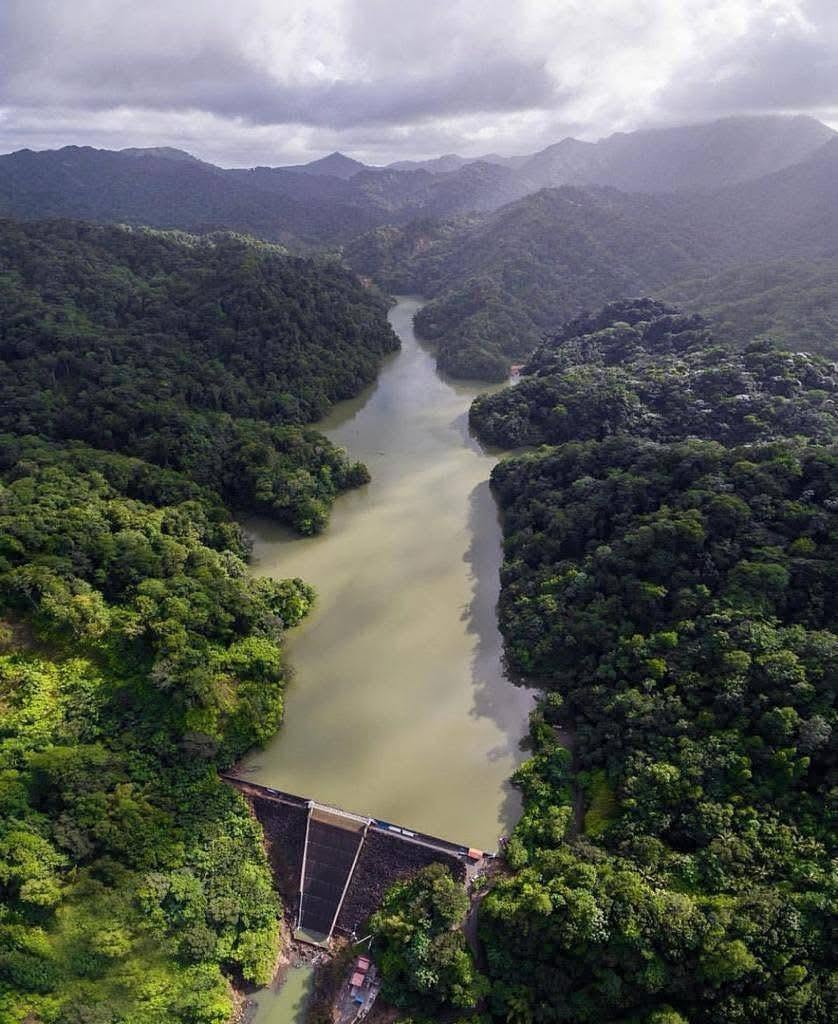
A visual guide to Saint Lucia’s water costs—and a practical programme to connect better service with household protection.
01 / The research in a minute
The central policy choice is to pair funded household support with clear service duties and the capacity to meet them.
EC$78.47
At 3,660 imperial gallons, the scheduled January 2027 domestic water charge is EC$78.47, up from EC$63.78 under June rates and EC$53.08 before June. The fixed minimum stays EC$24.42. ↗
See the tariff curveEC$26.81
Two households each using 1,800 gallons pay EC$26.81 more in January through one permitted shared-property account than through two eligible accounts. At lower use, sharing can reduce the combined charge.
Explore a shared account12.0%
In an illustrative household with EC$1,200 in monthly resources, a EC$24.42 bill plus EC$120 spent coping with interruptions takes 12% of resources. The bill alone takes about 2%.
Build a household scenario02 / Source to service
Rainfall, source conditions, treatment, power, pressure and maintenance all shape whether water reaches the tap. Select a stage to see where policy can make a difference.
The journey to the tap
Follow the four connected parts of a reliable water service. Select a stage to explore the practical work and the evidence to track.
01 / Source
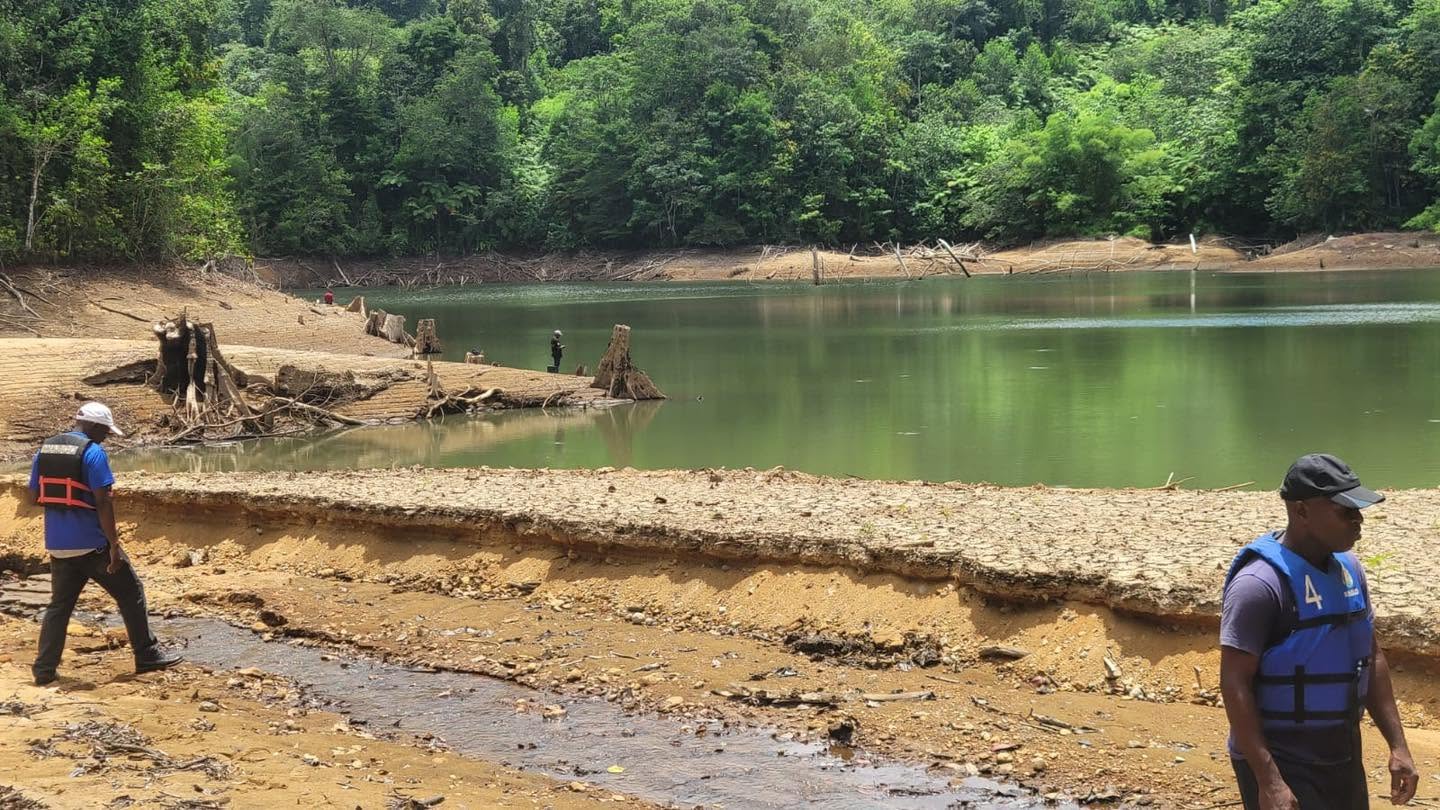
Water reliability begins where rain meets the land. Dry periods constrain available water; heavy rainfall can carry sediment into rivers and reservoirs.
The proposed programme connects these stages through service-zone records, funded response capacity and public reporting.
Repairing physical leakage can increase usable supply or reduce production costs. Correcting meters and billing errors improves recorded sales and revenue. Measure both effects separately, alongside pressure and supply hours.
When a functioning meter replaces estimated billing, a household’s recorded use can rise. Give customers the old and new readings, meter-change dates and a clear route to query the transition. ↗
The September 2026 CDB project launch identified US$22.83 million of external finance and US$7.16 million in counterpart funding: US$29.99 million using the rounded totals. Follow procurement, works, testing and commissioning through to measured service. ↗
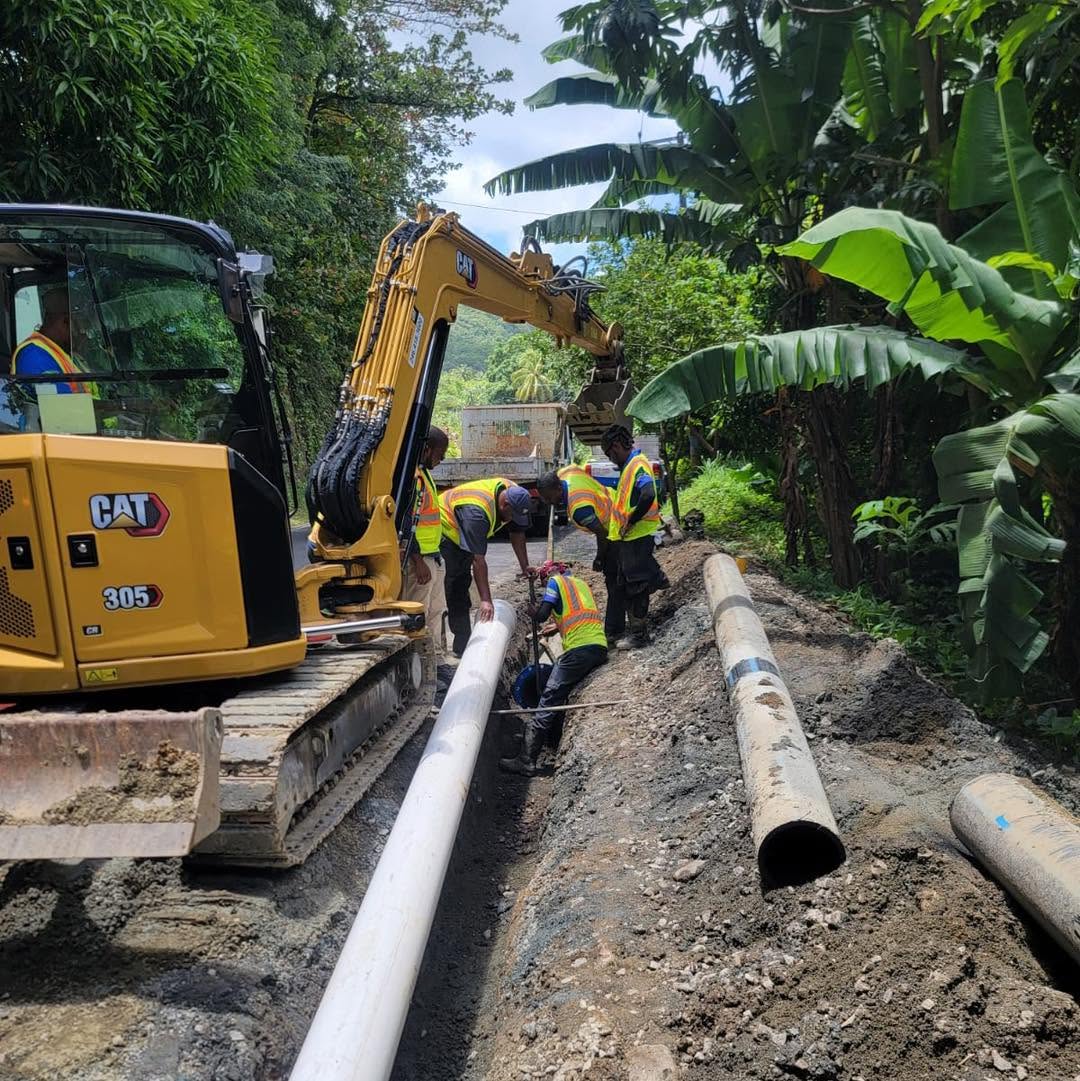
Reconcile the proposed local programme with funded pipeline and treatment projects. Each activity needs an owner, an operating budget and a clear account of which costs are additional. ↗
03 / Explore the bill
The first 2,000 imperial gallons attract a fixed monthly domestic water charge. Consumption above that level enters progressively higher-priced blocks. Move the control to see the effect.
EC$14.69 more than June 2026 at this volume (23.0%).
The first 2,000 gallons of domestic water keep a minimum charge of EC$24.42 in all three schedules. Sewer minimum charges change separately.
| Schedule | Water charge |
|---|---|
| Before June 2026 | EC$53.08 |
| June 2026 · current | EC$63.78 |
| January 2027 · scheduled | EC$78.47 |
Each service has a minimum covering the first 2,000 gallons, a prorated rate for the next 1,000, and a higher prorated rate above 3,000. Water and sewer charges are each rounded half-up to cents, then added. One imperial gallon equals 4.54609 litres.
| Schedule | Minimum | Next 1,000 gal. | Per 1,000 above 3,000 |
|---|---|---|---|
| Before June 2026 | EC$24.42 | EC$12.21 | EC$24.92 |
| June 2026 · current | EC$24.42 | EC$16.77 | EC$34.23 |
| January 2027 · scheduled | EC$24.42 | EC$23.03 | EC$47.00 |
This consumption-charge model uses full monthly periods and whole imperial gallons. Sewer applies to eligible accounts at the same chargeable volume. Account-specific arrears, deposits and adjustments sit outside these calculations. Actual invoice conventions should be checked with WASCO.
Source: NURC final determination notice, June 2026, pp. 6–7 ↗. Schedule comparison calculated by SLPA.
The explorer calculates domestic consumption charges. Sewerage is included only when you select an eligible water-and-sewerage account, using the same billed volume for both services. Actual statements can also contain arrears, credits or other account adjustments. ↗ ↗
June 2026 rates are the current schedule in this research. The January 2027 phase is already set out in NURC’s notice. SLPA proposes a readiness review before that phase, with lawful corrective action and any justified formal tariff proceeding. ↗
Start with the minimum. Add the relevant rate for each 1,000 gallons between 2,000 and 3,000. Add the upper-block rate for each 1,000 gallons above 3,000. Fractional blocks are proportional; round each service’s final charge to the nearest cent.
Charge = minimum + first-block use × first-block rate ÷ 1,000 + upper-block use × upper-block rate ÷ 1,000
One imperial gallon is 4.54609 litres. The old upper-block water rate used here is EC$24.92, as printed in the final notice. This also reproduces the earlier regulator’s EC$53.08 worked example; a EC$24.82 entry elsewhere in the report is inconsistent. The 3,660-gallon example is a fixed comparison volume. ↗ ↗ ↗
Water and sewerage are VAT zero-rated. The Health and Citizen Security Levy guidance excludes VAT zero-rated services, so these calculations apply no tax uplift. ↗ ↗
04 / The household view
Household size, shared accounts, income and the cost of getting water during interruptions all affect affordability. A useful protection programme sees the people behind the account.
Coping expense covers cash spent obtaining water: for example, purchased water, delivery or refills. Enter other essential spending before water. For the shared-property scenario, all amounts cover both households together.
January 2027 scheduled rates + assumed coping expense
Water uses 46.16% of the EC$300.00 left after other essentials.
Household resources, use and coping expenses are illustrative assumptions. Measuring how many households face hardship requires survey and account data. Figures are monthly EC$. Your inputs stay in this page for this visit.
A tenant may pay through a landlord. Several households may share a meter. A family may have no direct utility account. Assessment and appeals should accept workable evidence of residence, resources and water costs, while checking duplicate claims.
Cap account credits at eligible charges. Establish a separately authorized route for people who need emergency access or support without a direct account.
Record purchased water, transport, pumping energy and other direct costs, alongside time spent collecting water and missed activities. For equipment, distinguish the cash needed upfront from an annualized cost, and avoid counting both in the same total.
Household survey evidence and a small local baseline should calibrate eligibility, take-up and support levels. The examples here show mechanisms; their inputs are available for inspection and adjustment. ↗
05 / SLPA’s proposed programme
Adopt a funded Water Service and Household Protection Programme through the institutions Saint Lucia already has. Begin in up to three service zones, then use verified results to decide what expands.
Set costed standards for notice, updates, pressure, emergency access and complaint handling. NURC should settle the legal instrument and verification process; WASCO should plan staffing, spares, communications and repairs around it.
Use a defined subsidy instrument, transparent eligibility, an accessible appeal and timely reimbursement. Include tenants and shared-account households in programme design. Preserve funding for treatment, safe operation and essential maintenance.
Select zones using service stress, hardship, technical feasibility and existing works. Validate bulk and customer measurements, record a usable baseline, then carry out bounded repairs and pressure management with a trained response team. Urgent repairs and emergency protection proceed immediately; record their timing in the baseline.
Assess storage, safe filling, backup power and delivery arrangements at six critical sites in the planning envelope. Document usable stocks, demand and who triggers an alternative supply. Budget for cleaning, testing and maintenance.
Pair a lawful public summary with fuller regulatory returns. Show interruptions, pressure, quality, repairs, assistance reach, complaints and spending. Publish reasons for missed commitments and the corrective response.
Review continuity, quality, access, cost and operational capacity together. Show the actual observation period, weather and seasonal gaps. Keep effective measures, revise weak ones and fund recurring obligations before expanding.
The Water and Sewerage Act provides the sector framework. Sections 83–84 establish Cabinet’s subsidy route by Gazette Order, with NURC advice and review. NURC Act section 40 allows gazetted codes linked to service-licence compliance. The exact instrument should be checked against the operative licence and completed Service Standards Agreement. ↗ ↗
The June determination commits to publishing the Service Standards Agreement when completed. Quarterly returns go to NURC; this programme adds a legally settled public extract with appropriate privacy and confidentiality protections. ↗ ↗
Section 87 provides a route to remedial and compensation directions after an investigated, substantiated breach causing foreseeable damage. New automatic credits require adopted rules and funding. Reconcile the section’s legacy procedural cross-references before issuing complaint templates. ↗
A readiness review should produce reasons, corrective actions and any justified formal tariff proceeding. Missed service milestones do not automatically cancel January’s scheduled tariffs under the current notice.
06 / Fund the promise
A funded reduction in household payments can protect service capacity. An unfunded reduction can leave fewer resources for treatment and maintenance. Explore the accounting, then inspect the proposed budget.
Reference gross bills are set to 100 units. Choose a scenario to see how receipts meet operating outflows, debt service and a separate maintenance reserve.
Households 90 + public funding 0
Operations 70 + debt 10 + reserve 5
90 units received cover 85 units of operating outflows, debt service and a separate maintenance reserve.
General and targeted relief both leave a margin of +5 when public funding is 3 and total receipts are 90. Their reach, fairness and administration require a separate assessment. Timely reimbursement matters in either design.
All values are assumed index units for a cash-accounting illustration. Current audited accounts and a cash bridge are needed to assess WASCO’s financing capacity.
Reconcile bills, collections, arrears, operating payments, debt service, restricted project funds and essential maintenance. The public review found historical financial evidence and current project announcements; a usable current audited cash bridge remained an evidence request. The 2023 expense base and older collection figures need their dates and accounting definitions preserved. ↗ ↗
Non-transfer allowances vary from 70% to 140% of the base, with 15% contingency on those allowances and the EC$105,000 relief ceiling held fixed.
| Line | Calculation | Amount |
|---|---|---|
| Programme coordination | 12 months × EC$6,000 | EC$72,000 |
| Two field technicians | 24 staff-months × EC$5,000 | EC$120,000 |
| Data and customer support | 12 months × EC$4,500 | EC$54,000 |
| Independent verification | 4 rounds × EC$12,500 | EC$50,000 |
| Instrumentation | 3 zones × EC$45,000 | EC$135,000 |
| Bounded repairs | 3 zones × EC$75,000 | EC$225,000 |
| Critical-site backup and upkeep | 6 sites × EC$15,000 | EC$90,000 |
| Community access and grievances | One access package | EC$20,000 |
| Temporary household relief | 500 household equivalents × EC$35 × 6 months | EC$105,000 |
| Emergency supply reserve | One reserve | EC$60,000 |
| Training and protocols | One training package | EC$25,000 |
| Contingency | 15% of EC$851,000 non-transfer allowances | EC$127,650 |
| Total first-year envelope | EC$1,083,650 | |
Staffing covers mobilisation and the full twelve months. The EC$35 monthly relief allowance and 500 household equivalents are planning assumptions to be calibrated against need. Eligible bill credits would be capped at eligible charges, with a separate lawful route for households without direct accounts. Quotations, funding decisions and reconciliation with existing projects are required before commitment.
The base is EC$956,000: EC$851,000 in non-transfer allowances plus EC$105,000 in relief. Contingency is EC$127,650. Major transmission works, new treatment capacity and land acquisition fall outside this envelope; continued operating costs require a recurrent allocation.
SLPA proposed programme, revised 11 October 2026. The range shows sensitivity to the specified procurement assumptions.
The EC$1,083,650 planning envelope includes staffing from mobilisation, instruments in up to three zones, repairs, six critical sites, emergency access and temporary support. Obtain quotations and reconcile existing allocations before appropriation.
The relief allowance assumes 500 household equivalents at EC$35 for six months. Calibrate these planning inputs with eligibility evidence and actual charges.
The earlier EC$1,030,400 first-90-day design included different activities, eight facilities and household storage vouchers. The new twelve-month design includes six facilities and no separate 100-household tank allowance. These are alternative scopes.
Major transmission works, land acquisition and new treatment plants sit outside this envelope. Operations after year one need a further allocation.
07 / From adoption to evidence
Set an adoption date, available funds and named leads. Run the implementation clock alongside a public readiness review by 15 December 2026, before the January tariff phase.
Publish the tariff guide, programme owners, zone-selection criteria and agreement status. Start the incident log and current cash bridge.
Aim for at least four weeks of valid baseline data where feasible. Check meters and pressure instruments, cost the standards and repairs, and authorize assistance.
Publish the repair and spending record, a service summary and independently checked complaints and access barriers. Correct weaknesses.
Report the service-agreement status, operating funds, household support and unresolved risks. If adoption is late, publish an interim review with the remaining work and responsible offices.
Assess first-year implementation using the actual months observed. Publish seasonal gaps and recurring costs. A full twelve months of observation after activation needs a separately funded continuation.
Proposed response standards
These starting standards require costing and lawful adoption. Restoration times should reflect the incident, safety checks and conditions at the end of the network.
Advance notice of a planned interruption.
After an unplanned incident is confirmed, then updates every four hours.
Assess critical-site needs; escalate a failed promised delivery within two hours.
Assess need by this point, or earlier as essential stocks require.
SLPA proposes acknowledgement within one business day, initial assessment within three, and an outcome within ten where practicable, with updates at least every five business days. Keep a case number, evidence, reasons, assistance offered and appeal route. These are proposed programme standards.
Existing NURC guidance starts with the provider and allows unresolved complaints to move to the Commission. Regulation 16’s 48-hour prompt-response benchmark concerns the Commission’s response to a customer’s written communication. ↗ ↗
| Measure | Record to publish |
|---|---|
| Continuity | Customer interruption-hours, affected accounts, dates and cause; identify missing logs. |
| Pressure | Share of valid monitored time within the adopted range; location and instrument coverage. |
| Water quality | Required samples, completed tests, results and corrective action. |
| Emergency access | Requests, promised and completed deliveries, missed commitments and critical-site stocks. |
| Repair performance | Work completed, repeat breaks, response time and restored service checks. |
| Household protection | Applications, approvals, payments, tenant/shared-account access and appeals, with privacy safeguards. |
| Financial capacity | Receipts, essential payments, maintenance provision, reimbursement delays and committed costs. |
Use an independent check and publish exceptions. Compare changes with rainfall, existing project commissioning, meter changes and the observed season. Expansion should follow safe, sustained service and affordable recurring operations.
The decision
Saint Lucia can begin with a bounded, measurable programme. The test is whether households receive a better service, can afford access, and can see how public promises are being kept.
Return to the policy08 / Evidence & further reading
This web edition brings the tariff calculations, household scenarios, programme design and delivery tests together. Sources are linked beside the relevant claims and collected below.
The strongest numerical findings are reproducible calculations from published tariff schedules. Household and cash-flow examples isolate mechanisms using visible assumptions. Programme costs are planning allowances for a defined scope.
Priorities for the next evidence round are a current utility cash bridge, the operative licence and completed service agreement, verified service-area records, and household evidence linking costs to income, tenancy and shared meters. The public search’s evidence gaps describe what the study could establish.
JICA’s 2024 survey reported historical coverage of 98% and 24-hour service reaching 75% in the rainy season and 60% in the dry season. Those observations provide background and must retain their source period when used. A new programme needs a dated local baseline. ↗
Recent WASCO advisories document operational stress and responses. National hardship prevalence and current islandwide continuity require a broader dataset. ↗ ↗
The implementation plan responds to staffing, procurement and delivery constraints identified in CDB’s country-programme evaluation. Staff time and verification are funded from mobilisation. ↗
Household resources, essential spending and coping costs are assumptions, editable in the explorer. Total water burden is utility charges plus direct coping costs divided by resources. Residual resources equal resources minus essential spending and water costs. Time burdens should be reported separately unless a defensible valuation is provided.
The cash model uses normalized units: gross bills of 100, receipts of 90 and essential outflows of 85. With equal public funding, general and targeted support preserve the same utility cash margin in the model. Distribution, administrative cost and take-up need separate evidence.
The budget starts with EC$851,000 in non-transfer allowances and EC$105,000 in temporary relief. A 15% contingency on the non-transfer allowances adds EC$127,650. The sensitivity range multiplies non-transfer allowances by 0.7 or 1.4, applies the same contingency rule, and holds relief fixed: EC$790,055–1,475,110.
A four-week baseline provides an operational starting point. Seasonal comparison and attribution need more observation, a clear record of other projects and independent verification.
That is the protected water minimum for up to 2,000 imperial gallons. Higher consumption and eligible sewerage charges follow their own rates. Use the explorer to calculate each phase.
The result depends on use and account eligibility. Low use can avoid a second minimum; higher pooled consumption can enter the upper tariff blocks. The shared-account explorer shows both outcomes.
Keep the bill, readings, meter-change details and complaint reference. Ask WASCO to explain the charge and resolve the issue. Unresolved complaints can be referred to NURC under its published procedure. ↗
They are SLPA’s proposed starting standards for costing and lawful adoption. Existing statutory rights and applicable licence duties continue to govern service and complaints.
The June notice restricts that account to the specified raw-water project and requires prior NURC approval for another use. The household programme needs a separately authorized, funded route. ↗
Verified service improvements, safe water, accessible support and complaints routes, and affordable ongoing operation. Publish the observation period and the factors that could explain changes.
NURC
Domestic water and sewerage schedules, pp. 6–7; service agreement, dedicated account and reporting, pp. 8–10.
NURC / ECONTEC and Castalia
Tariff context and earlier 3,660-gallon worked example, Table 39. The expense base includes unaudited 2023 accounts.
WASCO
Account minimums, tenant requirements and restrictions on supply across property boundaries.
WASCO
Transition from estimated consumption to functioning meters and actual readings.
Government of Saint Lucia
Customer rights and obligations; direct and cross subsidies, ss. 83–84; breach remedies, s. 87; complaints regulations.
Attorney General’s Chambers
Gazetted codes and their connection to service-licence compliance.
Attorney General’s Chambers
Investigated, substantiated breaches and compensation for foreseeable damage.
Attorney General’s Chambers
Access framework and exemptions; read with section 17 on confidentiality.
NURC
Raise the matter with the provider first; unresolved complaints can be taken to the regulator.
Caribbean Development Bank
US$22.83m external package and US$7.16m counterpart contribution; raw-water pipeline project launch.
Japan International Cooperation Agency
Saint Lucia chapter: historical coverage and continuity, p. 3-29; billing and collections, p. 3-37. Observation years vary.
WASCO
Service advisory about southern network conditions and the response.
Government of Saint Lucia / WASCO
Commencement of work between Bonne Terre Gap and Gros Islet Town Gap.
Caribbean Development Bank
Country-programme implementation, procurement and staffing constraints; pp. 33 and 39.
Central Statistical Office
The household evidence needed to calibrate affordability and assistance.
Attorney General’s Chambers
Zero-rated water and sewerage services, paragraph 2(2).
Government of Saint Lucia / SLASPA
Exclusions for VAT zero-rated services.
Research evidence cutoff: 8 October 2026. Web edition: 11 October 2026. Legal wording rechecked during revision. Calculations and programme design: SLPA.