Commission remit · Existing law · SLPA policy analysis
From the hearing to safer voyages
What the Commission can investigate and recommend, why SLASPA’s records matter, and how the evidence should test maritime reform. Coverage ends with the completed 13 October 2026 sitting.
Legal and policy context · evidence through 13 October 2026
The remit connects this collision to safer voyages.
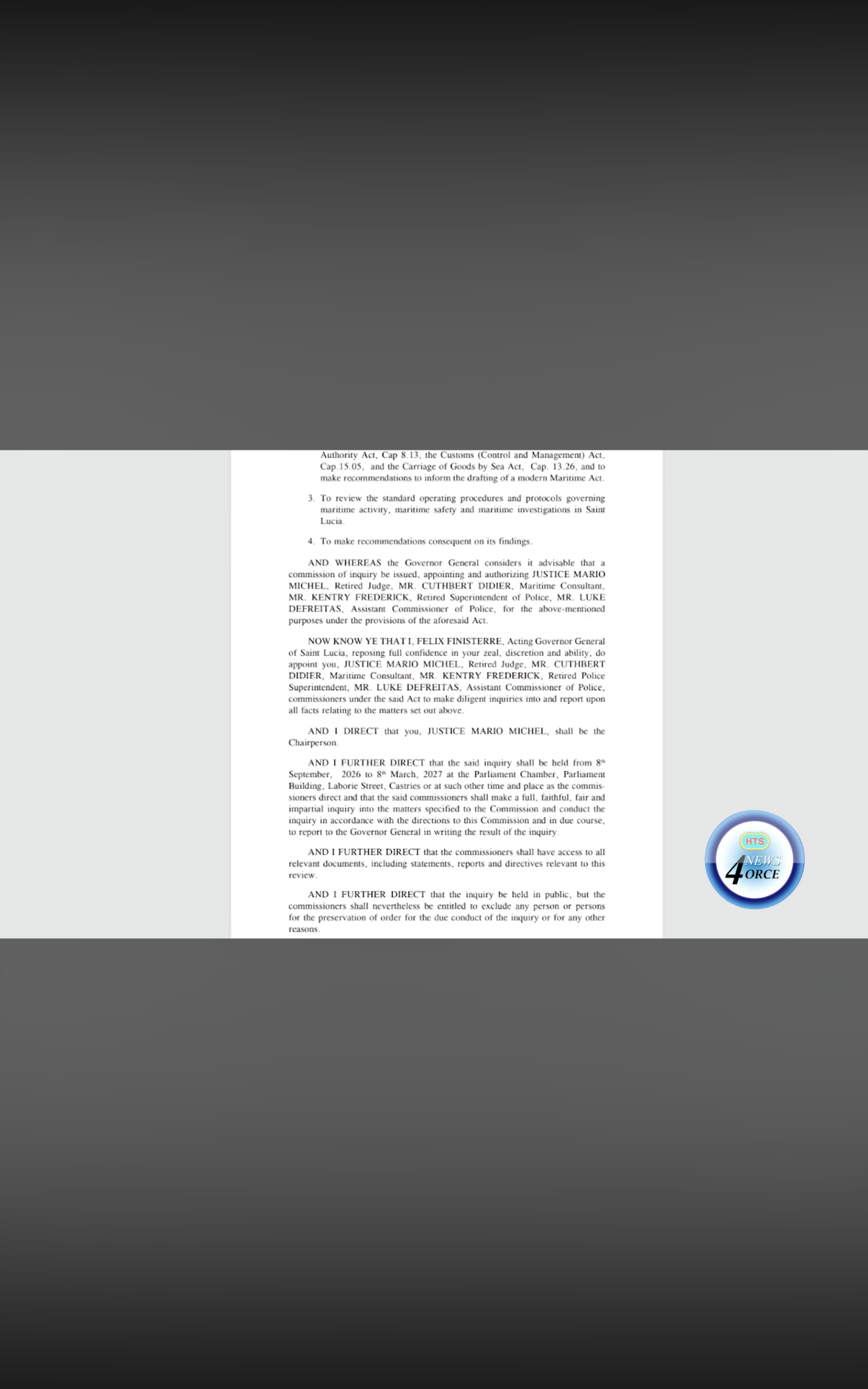
The Commission must investigate the collision, review maritime law and operating procedures, and recommend changes to inform the drafting of a modern Maritime Act. Its terms do not require it to deliver a complete Bill, and recommendations do not themselves change law. Official terms, repeated on 9 October.
The inquiry period runs from 8 September 2026 to 8 March 2027. The first public sitting took place on 13 October. At its close, the Commission announced a return on 14 October at 10 am; this edition covers only the completed 13 October record. Read the three-part hearing edition.
Official sitting notice · 9 October 2026
How to take part in the inquiry
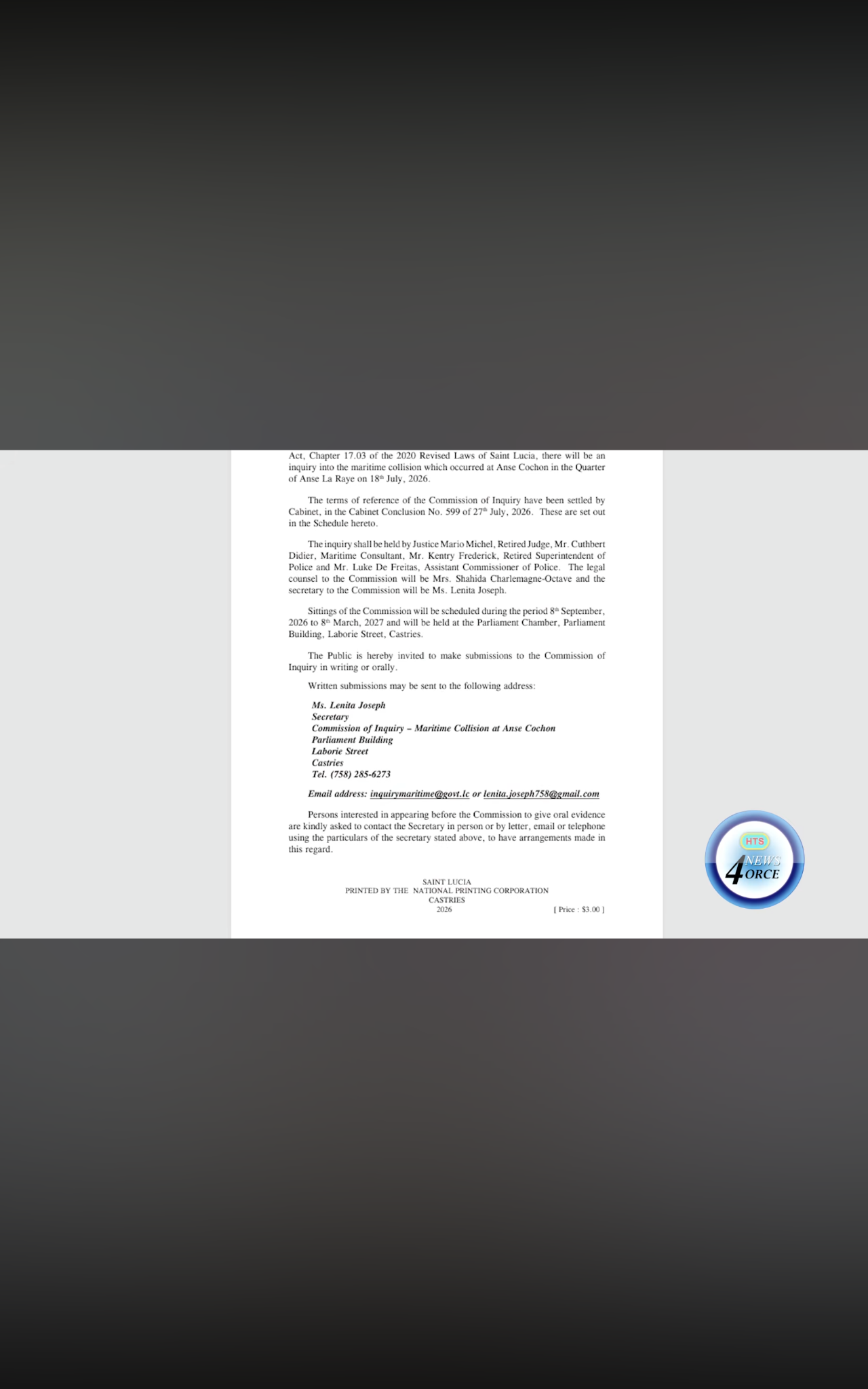
The public is invited to make written or oral submissions. Contact the Secretary to arrange oral evidence, in person, by letter, email or telephone.
Ms. Lenita Joseph, Secretary Commission of Inquiry – Maritime Collision at Anse Cochon Parliament Building, Laborie Street, Castries
Government email: inquirymaritime@govt.lc. The Gazette notice also lists lenita.joseph758@gmail.com. These contacts are reproduced from the notices; SLPA has not tested delivery or contacted the secretariat.
Participation after the first sitting
The 9 October notice announced the first sitting at Parliament on 13 October. It remains the published contact route for people wishing to give evidence. At the close of day one, the Commission announced that it would resume on 14 October at 10 am. That announcement is not confirmation in this edition that the next sitting occurred.
Confirm current attendance arrangements, later dates, accessibility and sensitive-submission procedures with the secretary. The notice does not establish a complete future calendar or a general exhibit and transcript-access policy. SLPA does not receive evidence on behalf of the inquiry.
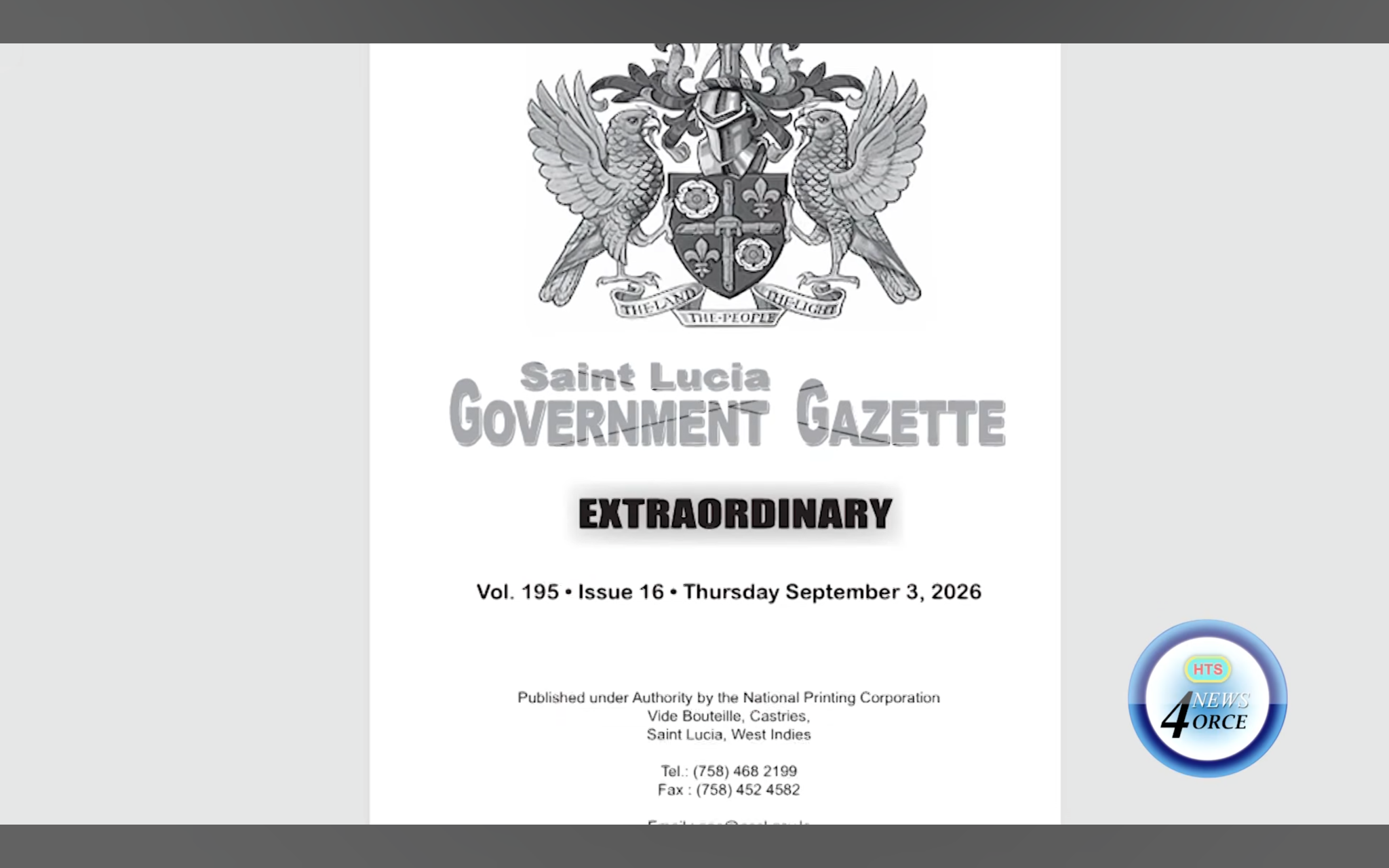
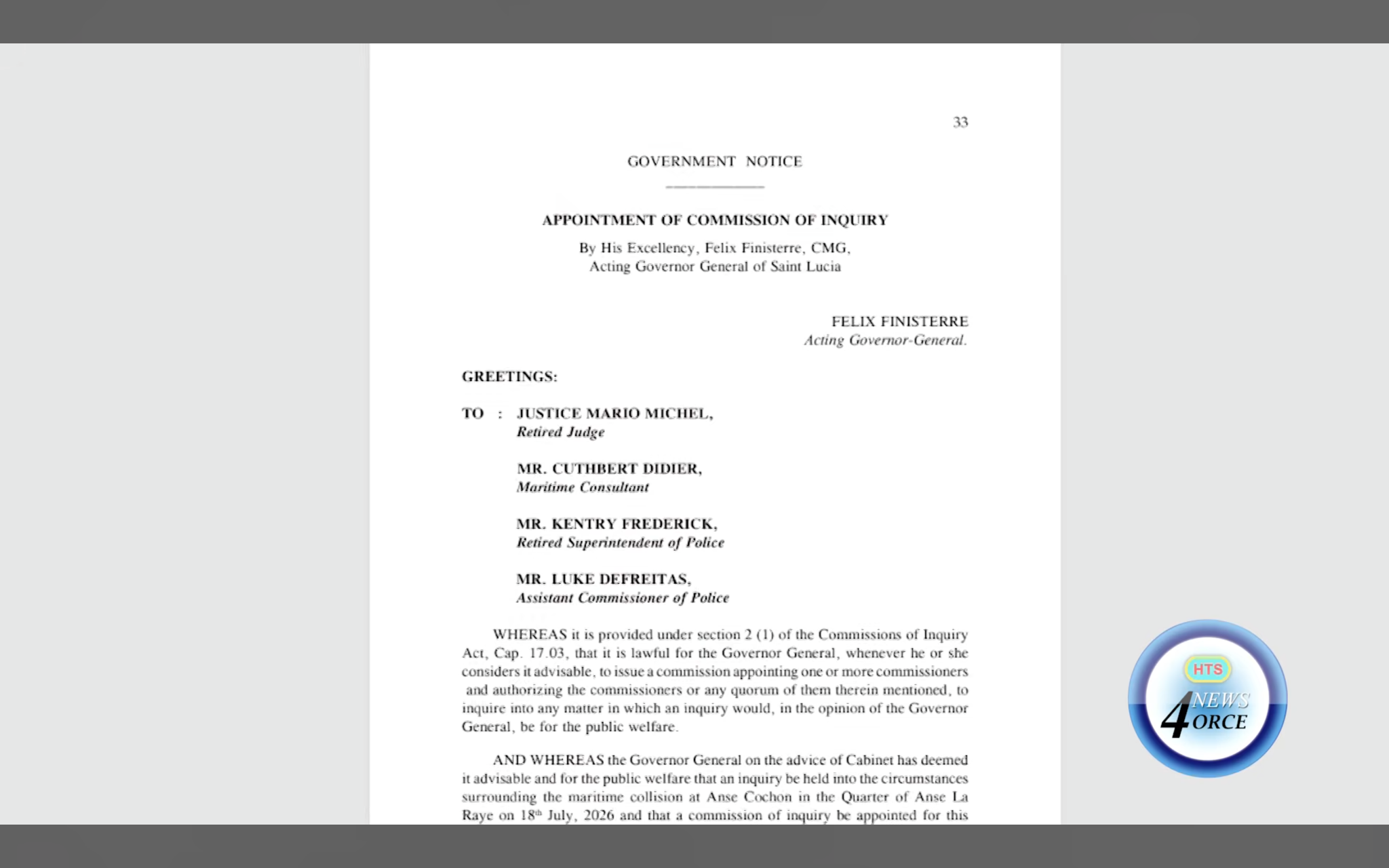
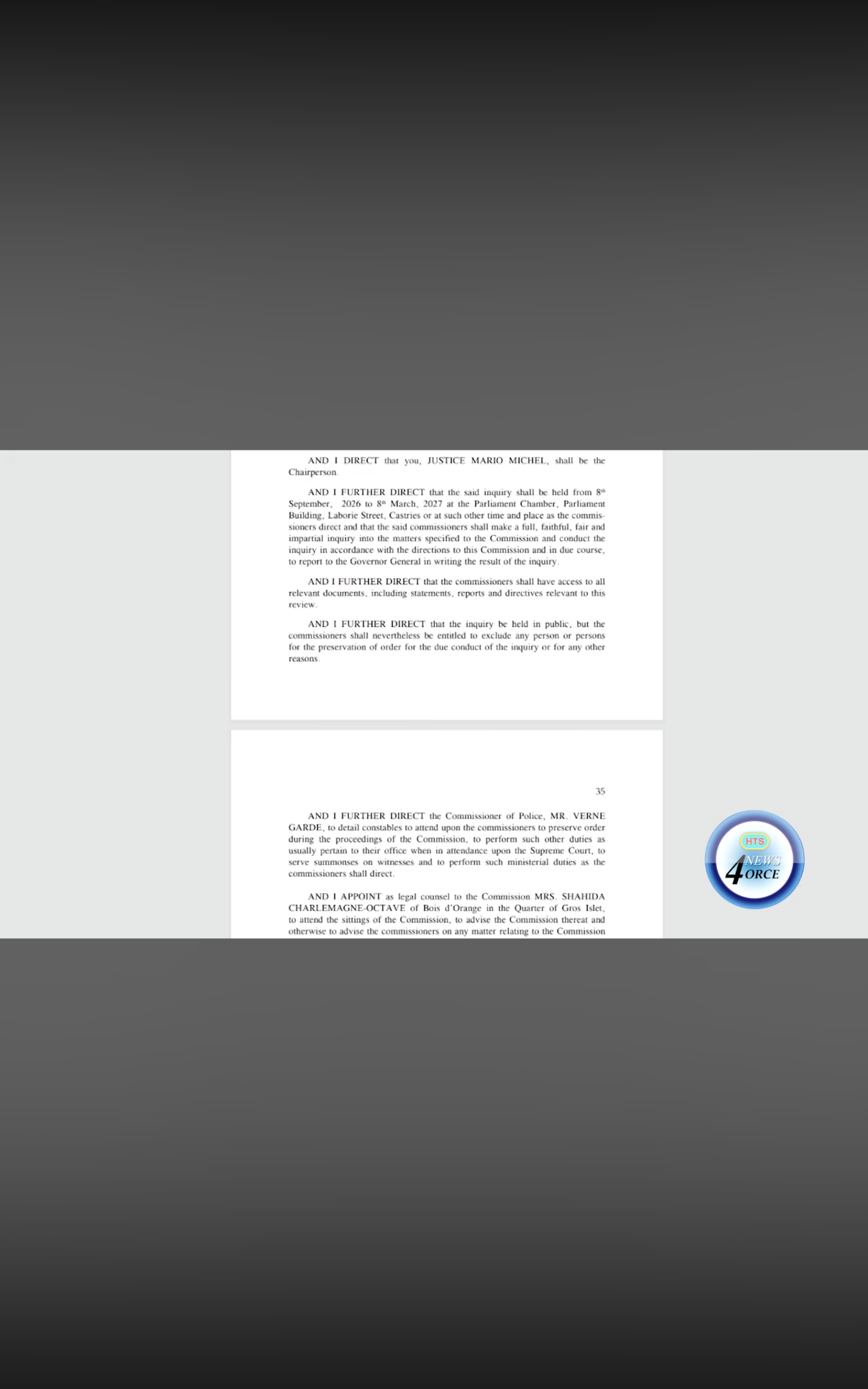
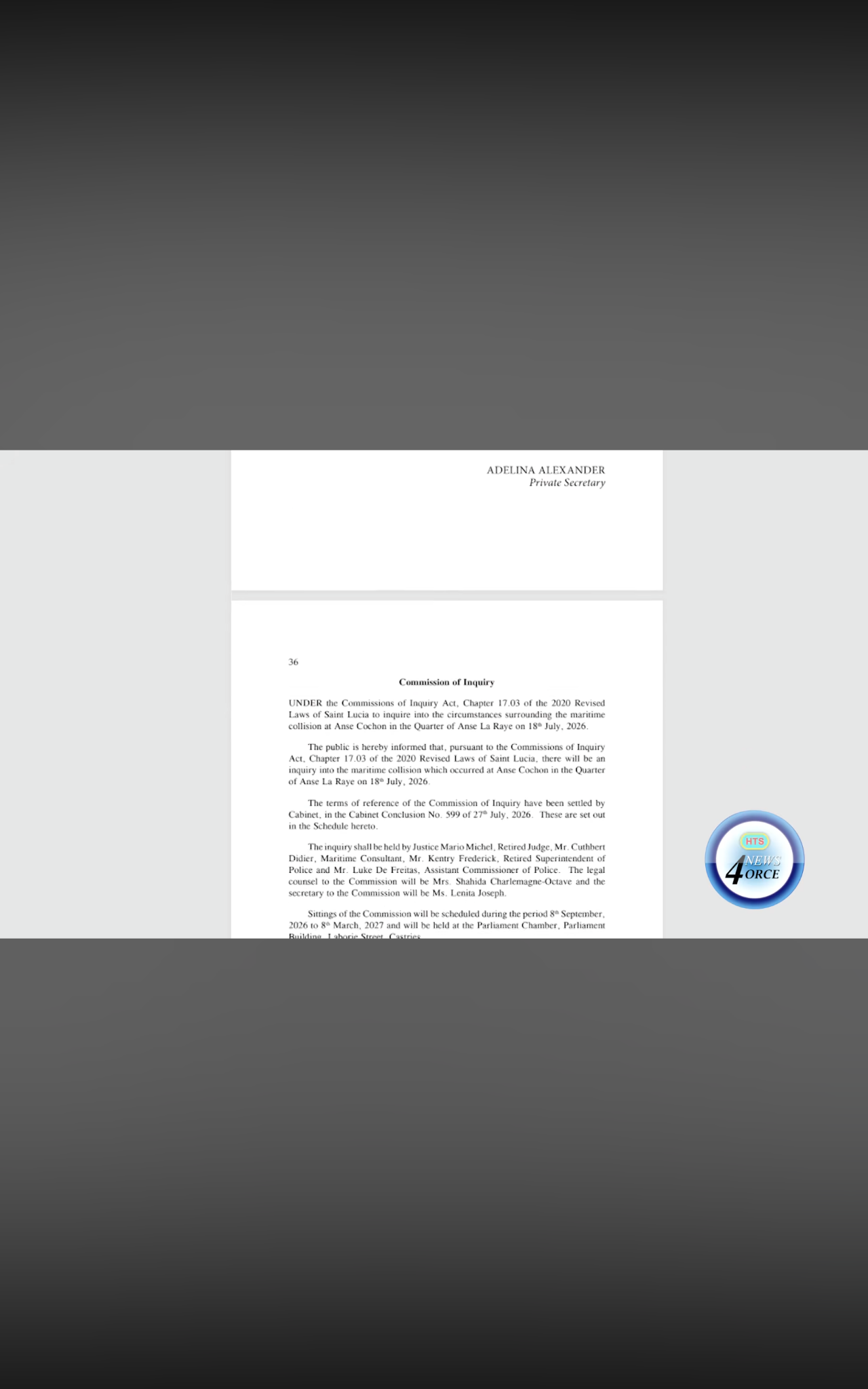
The appointment was made by Acting Governor General Felix Finisterre in an instrument dated 1 September 2026. The supplied cover identifies Government Gazette Extraordinary, Vol. 195, Issue 16, 3 September 2026. Publication gives the Commission effect under section 15 of the Act. All four commissioners were sworn in on 8 September.
The government’s 8 September announcement says appointment on 4 September; the supplied instrument is dated 1 September and the Gazette cover 3 September. That chronology remains unresolved.
Registered vessels in term 1
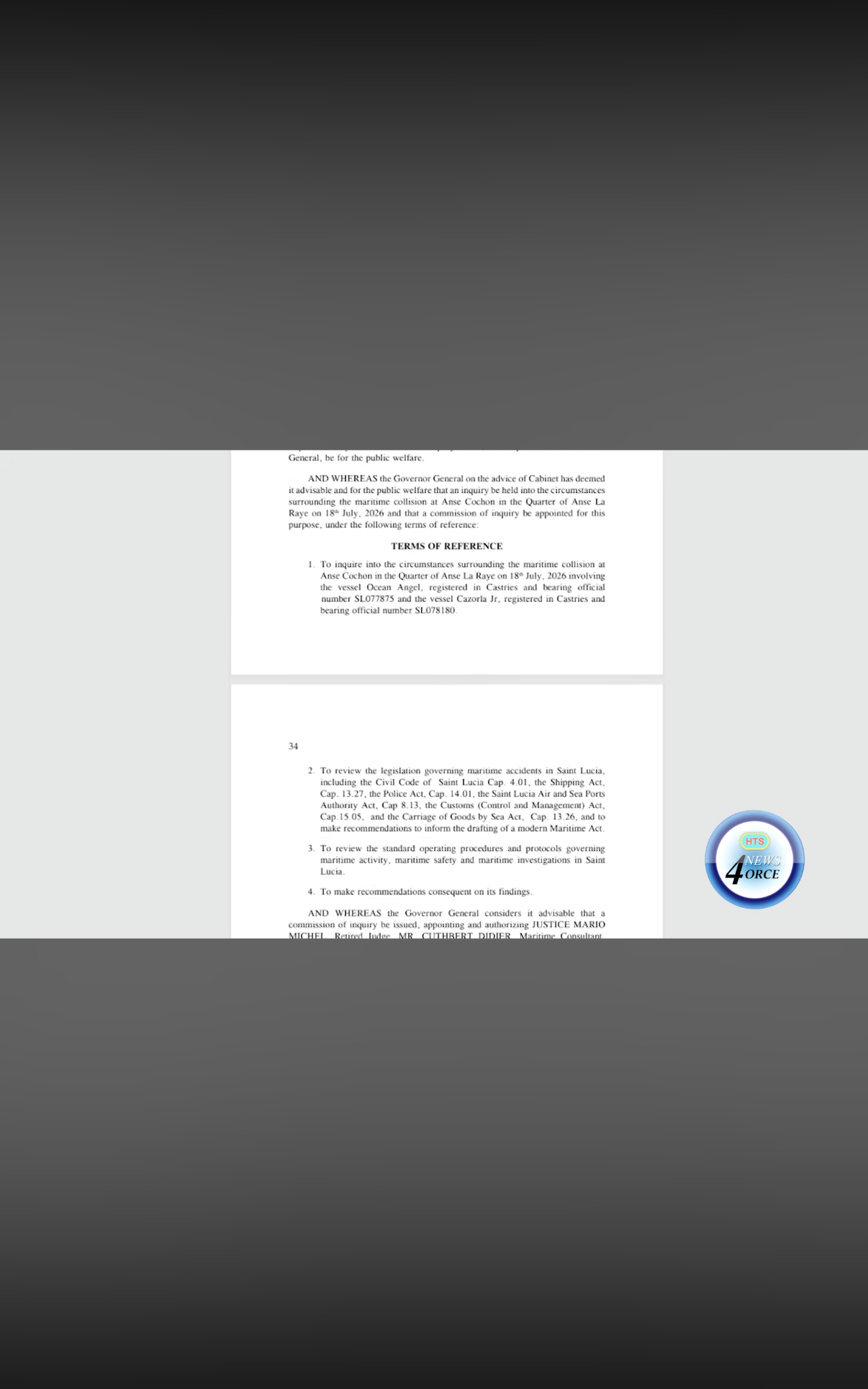
Ocean Angel — SL077875 Cazorla Jr — SL078180 Both are described as registered in Castries. The location is Anse Cochon in the Quarter of Anse La Raye; the date is 18 July 2026. Terms 1–4.
The 9 October Commission notice instead prints SL077857 for Ocean Angel. Both number strings also have apparent photographic counterparts; this does not prove two official registrations for one hull. SLPA’s reasoned working assessment is that the casualty craft was highly likely Ocean Angel #3, with its registry history unresolved.
The Mango Tours photograph visibly carries SL078180, strongly connecting that photographed craft with the official Cazorla Jr identifier. The original capture date and registry history still need authentication. Registration alone establishes neither permission for this voyage nor capacity, safety certification or insurance. Inspect the photographs and identity assessment.
Support and reporting duties
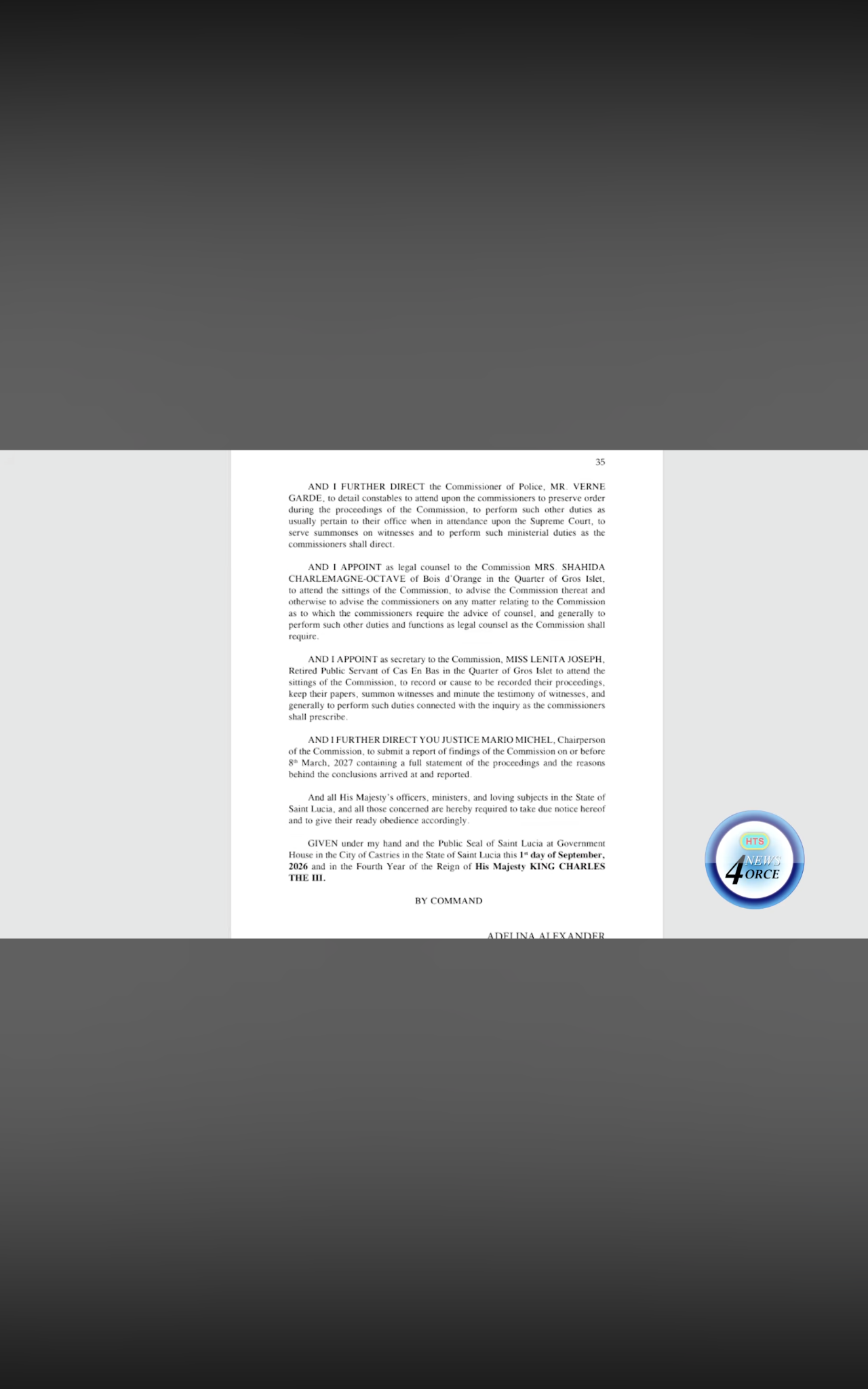
Shahida Charlemagne-Octave advises the Commission as counsel. Lenita Joseph is secretary, responsible for its records and witness arrangements. Commission counsel is not automatically the lawyer for each family or witness.
The Police Commissioner is directed to provide constables for order, summons service and related duties. The chair must submit findings on or before 8 March 2027, with a full statement of proceedings and reasons for the conclusions. The report goes to the Governor General. Report direction and appointments.
Read the four-part remit and inspect the Gazette source set
Inquire into the circumstances of the 18 July collision involving the two registered vessels named above.
Review maritime-accident legislation and make recommendations to inform the drafting of a modern Maritime Act: Civil Code (Cap. 4.01), Shipping Act (13.27), Police Act (14.01), SLASPA Act (8.13), Customs (Control and Management) Act (15.05), and Carriage of Goods by Sea Act (13.26).
Review operating procedures and protocols for maritime activity, safety and investigations.
Make recommendations consequent on the findings.
The mandate is to investigate and recommend. It does not expressly require the Commission to draft a Bill or authorise it to enact law.
This is a plain-language summary of terms 1–4. The p36 invitation says Cabinet settled the terms in Conclusion No. 599 of 27 July 2026; that Cabinet record and any separately titled Schedule have not been independently obtained.
The eight supplied HTS News4orce screenshots overlap across the cover and printed pages 33–36. They now cover the substantive appointment notice and public invitation. Their visible text was checked; the original Gazette PDF has not been independently retrieved. That retrieval gap does not mean the issue is absent online.
SLPA checked the original 2021 accident-investigation regulations. A later Commission timetable does not, by itself, reset the statutory safety timetable. Read S.I. 160/2021.
Known dates and conditional legal checkpoints · coverage through 13 October 2026
Date or clock
Process
Meaning and limit
18 Jul 2026
Collision
Incident date used for the statutory calculations below.
1 / 3 Sep 2026
Instrument / publication
The instrument is dated 1 September; Gazette publication on 3 September gives it effect under section 15. These dates differ from the inquiry period.
8 Sep 2026
Commission
Commissioners sworn in and stated inquiry period begins.
13 Oct 2026
Commission
First public sitting held; the three-part record is covered in this edition. At its close, a return on 14 October at 10 am was announced. No later testimony is included.
18 Sep 2026
Safety investigation
Calculated two-month point under regulation 9(11), if applicable. The rule requires prompt commencement, no later than two months. Ask for the actual start date and authority; an unlocated public notice is not proof of delay.
8 Mar 2027
Commission
End of the inquiry period and express deadline for submission of findings, proceedings and reasons to the Governor General (p35). Public release is a separate question.
18 Jul 2027
Safety report
Calculated twelve-month point under regulation 17: every effort toward a final report; an interim report if a final report is impossible within that time. Applies where a safety investigation is carried out.
28 days after receipt
Safety recommendation
Regulation 19(4): an addressee must respond with action/timetable or reasons for not taking measures. This is a response duty, not a deadline to complete every recommendation.
Why the existing safety rules matter
Regulation 3 addresses Saint Lucian ships and foreign ships in Saint Lucian waters. Regulation 9(7) requires a safety investigation for a qualifying very serious casualty, including one in Saint Lucian waters. The reported fatalities make this an urgent applicability question for the maritime authority. SLPA has not verified the official classification, appointment or commencement record, or a later amendment displacing these provisions.
Regulation 19 allows preventive recommendations before an investigation is complete. An early recommendation can protect passengers while cause and legal responsibility remain under examination. Regulators still need evidence, lawful powers, reasons and proper procedures for any vessel-specific enforcement.
Institutional evidence
Why SLASPA belongs in the inquiry’s record
SLASPA supports and administers the Division of Maritime Affairs. The Division lists vessel registration and licensing, surveys and certification, passenger capacity, seafarer competence, inspections, casualty investigation and assistance with rescue coordination among its functions. SLASPA’s published account.
That makes vessel files, inspection records, licence conditions, training records and operating procedures important evidence. It does not establish that SLASPA caused this collision or failed a particular duty. Test the applicable rule, the responsible office and the dated evidence of what occurred. A missing public document is a reason to request the record, not proof that the activity never happened.
Keep the public Commission, statutory safety investigation and criminal, civil and coroner processes distinct. They answer different questions and have different powers, timetables and evidence protections. The Commission’s appointment does not itself prove when the separate safety investigation began.
SLPA policy analysis
A modern Maritime Act should close proven gaps.
The useful question is how much law needs to change, how much needs clearer ownership, and how much already exists but needs consistent implementation. New legislation can help; it cannot inspect a vessel, repair a radio or rehearse a rescue.
01
Keep and enforce
Map every vessel to the rules that already cover it. Verify certificates, passenger capacity, crew competence, safety briefings, manifests and lifesaving equipment. Publish aggregate inspection results and the time taken to close serious defects.
Lead: maritime regulator, operators and port managers
Proof: inspected vessels / active vessels, with defect closure and reinspection records.02
Clarify who does what
Publish the responsibilities of the Director, Chief Inspector, police and Commission. Use independent technical review where an institution’s own actions are being examined. Record conflicts, recusals and the lawful basis for sharing each class of evidence.
Lead: Commission, maritime authority and Attorney General
Proof: role map, conflict protocol and evidence-access log.03
Write only the missing law
Build a section-by-section table of the current rules, overlap, gaps and proposed changes before drafting a Maritime Act. Include small domestic vessels, night voyages, investigation independence, proportionate enforcement, review rights and passenger redress.
Lead: maritime ministry and Attorney General, with operators and passenger representatives
Proof: published legal crosswalk and draft clauses linked to an identified problem.04
Fund the operating system
A new Act needs inspectors, training, maintained rescue equipment, reliable records and a budget. Cost each duty. Use shared regional specialist support where it adds capacity, with local ownership of evidence and decisions.
Lead: Finance, maritime authority and regional partners
Proof: funded posts, equipment readiness, exercises and an annual operating plan.
What a practical law and enforcement audit should cover
The existing Small Commercial Vessel Code already contains passenger-capacity, passenger-record and safety-briefing provisions for vessels within its scope. Begin with vessel size, use, passenger numbers and operating area. Do not treat a proposed digital manifest as evidence that the current law has no passenger-record requirement. Existing emergency-preparation rules · Capacity rules.
SLPA proposes a public, non-personal certificate check, clearer minimum controls for night passenger trips, affordable refresher training and an evidence-based inspection schedule. Test the impact on small operators: phased technical assistance can support compliance, while an immediate danger still calls for prompt lawful action. Procurement should include maintenance and data export so one vendor does not control the safety record.
For insurance and passenger redress, first establish current coverage duties, exclusions and claims routes. Then assess whether minimum passenger-liability cover, plain-language disclosure or a complaint route needs new law. No conclusion about either vessel’s coverage or liability follows from this proposal.
Families, witnesses and fair process
Make participation clear. Preserve the evidence.
A usable inquiry
Build on the Gazette’s published contact route with sitting dates, accessibility arrangements, submission rules and an explanation of what happens to personal information. Offer a family liaison and support for survivors. Explain when evidence can be heard privately and how a person can answer criticism.
Anyone holding relevant photos, video or records should preserve the original files and their date information. Keep a separate note of what was personally observed. Use the published secretariat route to ask how sensitive material should be submitted; SLPA is not the inquiry secretariat.
A lawful evidence protocol
Keep originals, record who handled each item and distinguish safety interviews from police evidence. Regulations 15–16 protect certain material, but allow specific disclosures and court exceptions. A blanket promise that nothing can be shared would be inaccurate.
SLPA’s proposed inquiry protocol should explain evidence categories, legal authority, access decisions and dispute resolution. Publish procedural progress without exposing protected witnesses or prejudging the competent legal processes.
The Commission has powers, and witnesses have rights
The Commissions of Inquiry Act gives commissioners powers to summon witnesses, require documents and take evidence on oath. It also protects witnesses against compelled self-incrimination and preserves witness privileges. A person whose conduct is under inquiry, or who is implicated or concerned, is entitled to legal representation; others may be represented with leave. These powers support inquiry, not a shortcut to a criminal conviction. Section 10 · Section 11 · Section 18.
For the safety investigation, the IMO Casualty Investigation Code offers an impartiality and independence benchmark. SLPA uses it to guide institutional design; direct SOLAS application to these particular vessels has not been established.
From evidence to safer practice · SLPA proposals
What would make this inquiry change everyday safety?
The Commission must establish what happened and consider wider reform. Those tasks connect through evidence. A hazard may deserve preventive action before its role in this collision is proved; a rule breach, if established, does not by itself explain the whole event.
The 13 October evidence makes that distinction practical. Accounts of lighting concern different moments; passenger and captain accounts differ over speed warnings and visibility. A certificate question is separate from whether the relevant skill, equipment or operating control could have prevented this collision. Read the attributed accounts and evidence questions before drawing a causal conclusion.
From day-one questions to evidence, controls and proposed law · SLPA analysis
Question
Evidence and practical control
Connection to Draft One
What was authorised for this trip?
Reconcile vessel identity, survey, passenger limit, operating area and any night conditions. Registration is one part of that record.
Test the proposed departure decision and vessel permissions against the actual existing duties.
Could danger be seen and managed?
Match light evidence to time, examine installation and maintenance, and test captain and passenger sightlines. Oral descriptions alone do not measure speed or visibility.
Test equipment, competence and voyage controls against demonstrated hazards; do not infer that every disputed fact needs a new offence.
Who was aboard, and how was help reached?
Reconcile passenger names and counts with original records. Obtain distress, dispatch, rescue and clinical handover times.
Test departure and return records, shore contacts and overdue-alert arrangements.
Will the system learn?
Preserve originals, identify the safety-investigation authority and track responses to preventive recommendations.
Test independent investigation, access protections and funded follow-through.
Explore the evidence-to-draft connection. Draft One remains an independent SLPA proposal. These are tests for further work, not Commission findings or evidence that the Commission has adopted the proposal.
A proposed test for each recommendation, informed by IMO investigation guidance. This is an analytical benchmark, not a finding about these vessels.
Question
What the report should show
What is established?
Dated evidence, competing accounts and unresolved hypotheses. Separate a verified condition from a conclusion about causation.
Which control applies?
The existing rule and responsible institution. Distinguish a gap in law from a failure of maintenance, enforcement or coordination.
What should change?
The proposed measure, its legal authority, cost and effect on passengers and small operators. Explain why it addresses the identified hazard.
How will it be tested?
A named owner, due date and observable result. Check use in practice and whether the hazard has been reduced.
Build on a Saint Lucian rescue that worked
In its 18 March 2026 release, the Marine Unit reported rescuing five people on 8 March, more than nine nautical miles northwest of Pigeon Island. It credited communication and visibility equipment alongside Fisheries and UBEC-supported training. This is an official account of one successful rescue, not an evaluation of the whole programme. Government and police account.
SLPA proposes checking how consistently that readiness is available: do devices work, can crews use them, does an alert reach the right person, and can responders locate the vessel? Count maintained equipment and demonstrated skills alongside items distributed. Assess passenger operators’ needs before extending suitable training and support.
Rehearse the handovers
A joint exercise should log when an alert is received, the position and people aboard are clarified, dispatch is accepted, search activity is coordinated, survivors are counted and clinical care takes over. Record who owns each handover and what information is missing.
Compare day and night exercises before setting realistic performance thresholds. This is an SLPA exercise proposal; it does not assert that any particular handover failed in July. The IMO’s IAMSAR framework distinguishes system organization, mission coordination and on-scene functions.
How a small-island inquiry can add specialist capacity
Tonga’s Princess Ashika Royal Commission received technical assistance from New Zealand’s accident-investigation commission, including Australian and maritime specialists. Written arrangements separated an initial factual report from later analysis and proposed findings; police work remained separate. The comparison concerns the organization of expertise, not similar accident causes. TAIC technical report · New Zealand government account.
SLPA proposes a published skills plan covering navigation, engineering, human factors, rescue coordination and legal drafting. Commission focused work where needed, with clear questions, costs, evidence access and independent review. Saint Lucian institutions should retain the records and decisions, with training built into the work. A small panel alone is not evidence of inadequate expertise.
Next public records
Measure follow-through, not just a final report.
For public sittings: the first hearing has been covered; publish the continuing calendar, accessibility and sensitive-submission arrangements, procedural rules, releasable exhibits and official transcripts.
For the safety track: classification, authority, investigators and actual start date; early recommendations where evidence supports them.
For operators and passengers: inspection coverage, serious deficiencies closed, passenger counts and rescue readiness.
After recommendations: responsible institution, acceptance or reasons, resources, due date and independently checked completion.
SLPA proposes a government response within 30 days of public release of the Commission report, followed by quarterly implementation updates. That is a proposed standard. It is separate from the existing 28-day response rule for statutory safety recommendations.
Apply RIPPLE-4, sovereign options and delivery readiness
RIPPLE-4: test first whether controls reduce exposure on actual voyages; then examine costs to families, operators and rescue services, effects on tourism and livelihoods, and whether the system learns from recurring defects. Record the causal steps rather than assuming a new law produces safety.
Sovereign options: retain local decision authority and usable records while drawing on regional technical expertise. Open data formats, transferable training and supplier exit terms reduce avoidable dependence. Compliance support should preserve safe local enterprise.
Readiness: every new duty needs a lawful owner, staff, tools, funding, a start condition and a measurable result. Count inspections against the active fleet and casualties against departures or passenger-trips. A higher number of reports may initially reflect better reporting, not worsening safety.
Research method: the three supplied transcript parts from 13 October, with speaker and transcription limits preserved; selected source vessel photographs with provenance limits; eight supplied HTS screenshots covering Gazette Extraordinary Vol. 195, Issue 16, 3 September 2026, pp33–36; the official 9 October first-sitting notice; Government’s July announcement; dated reporting; NPC archive search; original S.I. 160/2021; relevant online law; IMO guidance; official rescue and technical-assistance accounts. No new interviews, site visit or forensic collision reconstruction were conducted. The visual account tool illustrates attributed accounts; it does not supply measured vessel tracks or findings.
A record that can be checked. Read the source passages, compare accounts and distinguish evidence from analysis.