If a boat never calls, who knows it sailed?
The lighthouse can log a boat that calls. Across two sittings, four witnesses traced what happens when a boat sails unreported, a return is overdue or a passenger’s name has yet to reach the search team.
On this pageThe essentials
Two boats, Ocean Angel and Cazorla Jr., collided off Anse Cochon on 18 July 2026. Four people died. The Commission is examining what happened and what a modern Maritime Act should require. On 19 November it followed the evidence ashore, from a police station and a vessel inspection to the lighthouse and the office that receives monthly reports.
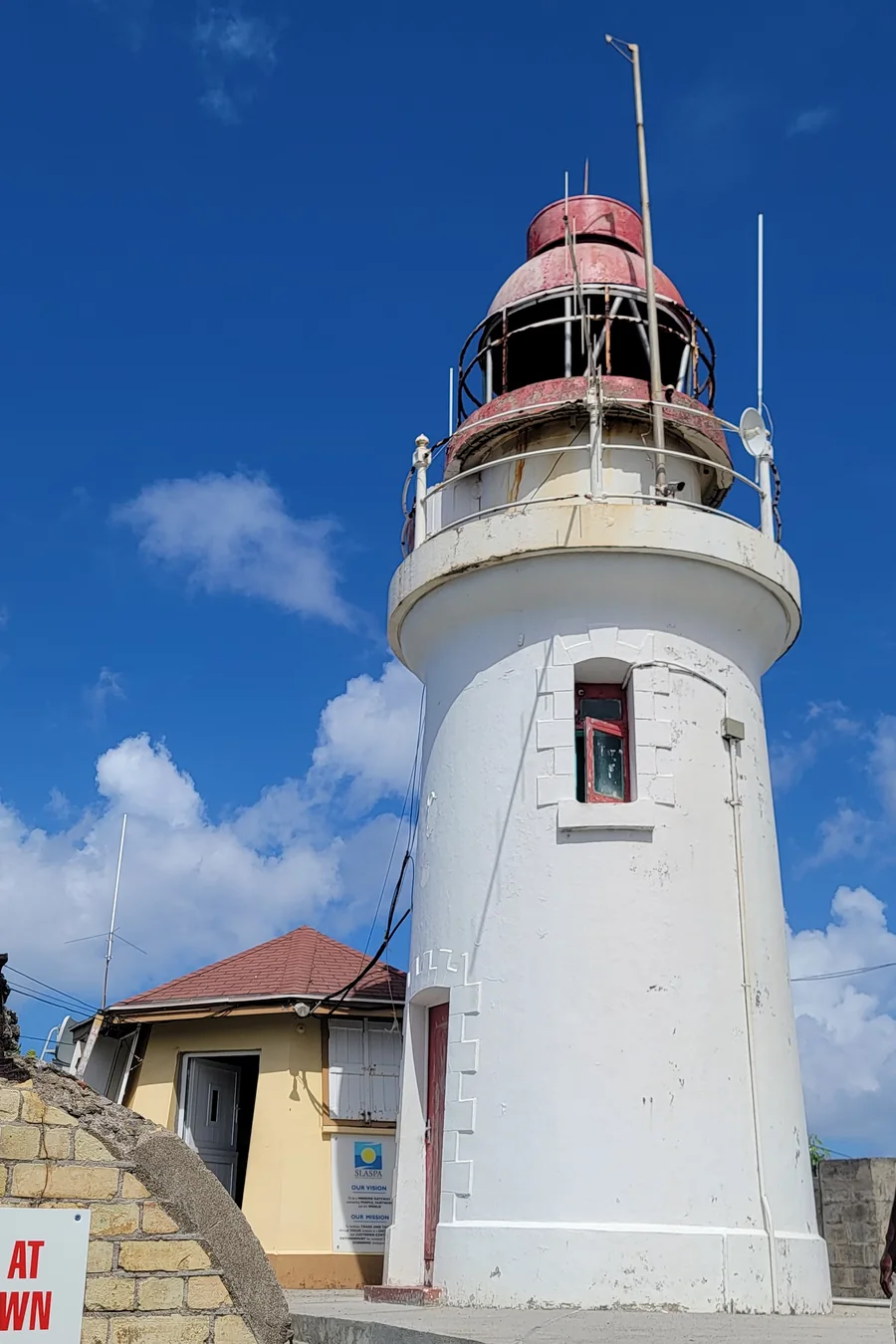
The afternoon supplied a practical idea. Adrian Hilaire, SLASPA’s Senior Manager of Seaports, said he and the Director of Maritime Affairs had discussed checking agents’ vessel bookings against calls received at the lighthouse. A booking gives the keeper a boat to expect. A last-minute hire made directly with a captain can leave both lists blank.
The day in brief
Three things the two sittings establish
A missed call is hard to count
Chief Pilot Myers said larger tour vessels tended to call. Hilaire described regular monthly reports and a gap in the reporting of smaller craft. Neither witness gave an independently counted total of trips. Ten calls in a log could be ten of ten departures or ten out of many more.
Check the sources (3)
An expected arrival needs someone to check it
Myers described a concerned person at the receiving port raising the alarm. SLASPA’s excursion guidance also asks a master who expects a delay to contact the keeper. Those arrangements leave a harder question. Who checks an overdue trip if the people aboard cannot make the call?
Check the sources (3)
A call has different uses before and after impact
The chair explored whether a call might have prevented this collision. Hilaire doubted that and stressed what crews do underway. Both accounts leave room for a shore record to help rescuers identify a boat, its expected return and how many people to look for.
Check the sources (3)
Inside the lighthouse log
What is missing?
A departure that goes unreported and a return that goes unconfirmed leave different clues ashore. Follow each example through the log.
Illustrative voyages drawn from the reporting questions at the hearing.
Hear the witnesses
Four accounts across two sittings
Part I · The shore response
What the three morning witnesses could establish
The police commander, the maritime officer and the chief pilot each saw a different part of the system. Their accounts provide a way to check when information changed hands.
Acting Assistant Commissioner of Police
Stephen Victorin
Stephen Victorin heard about the collision at about 1:30 a.m.
The acting Assistant Commissioner of Police said his subcommander alerted him early on Sunday, 19 July. He reached Soufrière shortly before 3 a.m. His briefing already included private rescues and people brought ashore. He described checking on officers at the hospital, responding to a request for help in Canaries and coordinating on land while the Marine Unit worked at sea. He could not confirm whether a northern unit asked to assist had attended. He also recalled an installed station radio whose working condition he could not verify.
His on-site coordination continued until about 1 p.m.
In the exchange, Victorin corrected his reference to Sunday morning to Sunday afternoon. Communications continued after he left. On 9 November, the investigating corporal placed his formal appointment at 5:09 p.m. and described helping earlier. Those are three different events. The station diary, initial task sheet and hospital handovers could show which names and leads reached the investigation while the search continued.
SLASPA Maritime Affairs
Maritime officer
The maritime officer explained the inspection and its limits
The officer described equipment checks alongside surveyors, including radios, lifejackets, life rings and flares. He had never inspected either collision vessel. The failed radio in the commissioners’ example belonged to a hypothetical later spot check. His answer described stopping operations until repair and reinspection. A dated notice, the recheck and a signed release would show how that worked on an actual boat. His given names remain uncertain in the captions.
SLASPA Seaports
Chief Pilot Myers
Chief Pilot Myers described the limits of the keeper’s view
The lighthouse helps coordinate movements at Castries, including near George F. L. Charles Airport. Myers said terrain can interrupt a VHF call from Soufrière and explained why the station cannot see every coastal boat in real time. He described passenger counts and calls from larger tour craft. Asked who would notice a missing arrival, he pointed to someone at the destination reporting concern. That answer makes it worth checking who had been told to expect each July boat.
Part II · Adrian Hilaire
What the seaports manager added
Hilaire was the afternoon’s sole witness. He identified himself as Senior Manager of Seaports and a licensed pilot. The secretary said he had come for questioning without a written statement before the Commission. He distinguished his current position from his former title, Director of Seaports.
Senior Manager of Seaports
Adrian Hilaire
One boat can have several permissions to check
Hilaire placed registration, inspection and boatmaster credentials with Maritime Affairs. He placed the vessel’s permission to ply for hire with Seaports and described the two offices reviewing applications and recommending a decision to the General Manager. On 18 November, surveyor Peter Joseph had distinguished the collision boats’ inspection status from the master’s licence. The way to test the July voyages is to match the hull, the actual operator and use, and the instruments in force on the day.
Castries could see some departures. Other ports relied more on calls.
Hilaire described five ports, with operating teams in Castries and Vieux Fort and port officers representing SLASPA in Soufrière, Marigot and Rodney Bay. He traced the reporting practice in part to catamarans continuing to call after moving from Castries to Rodney Bay. He said smaller craft called less often. Echoing Myers on certificate conditions, Hilaire suggested using a mobile phone when VHF contact fails. The hearing supplied no route test showing which method worked on the collision voyages.
His booking proposal gives the lighthouse an independent list
Hilaire said his managers submit monthly reports that go through him to the audit committee and Council. Those reports can record an incident that staff learn about. They cannot, by themselves, count every trip the lighthouse never heard about. His idea was to get an agent’s list of engaged boats and look for the expected calls. The example of twenty boats illustrated the idea. He described discussions, and acknowledged the problem of a directly booked or spontaneous late-night departure. No measured compliance rate emerged.
The local port officer and the technical investigation have different records
Hilaire said the port officer answers first to the chief pilot, then to him. He described complaints about visibility and about an incident allegedly left unreported. The afternoon exchange did not identify that incident as the July collision. For the July collision, Myers said the Soufrière officer had informed him. A local account could record when the port heard the news, who called and what staff saw ashore. The technical investigator could then use those observations alongside vessel evidence.
A proposed base, a staff request and the boats already committed elsewhere
Victorin described plans for a Marine Unit post in Soufrière. Hilaire said SLASPA had contributed to establishing it. He described three pilotage boats, competing pilotage and security duties, and no vessel allocated to Maritime Affairs for enforcement. He considered three technical staff inadequate for island-wide work and reported a staffing proposal. Neither sitting established a commissioning date already achieved, an approved staffing increase or regular night coverage. A roster and duty log would show what a crew could actually do on a busy weekend.
Other harbours need different measures
In Castries, Hilaire described discussions with fishers about passing close to docking cruise ships. He spoke of a planned Rodney Bay mooring project and a buoy identified for a grounding site near Soufrière. He also described discussions about night-ride training with Marine Police. These examples enlarge the reform agenda. They concern different hazards and stages of work, and offer no direct evidence of either collision boat’s speed or position.
Who calls if everyone aboard needs help?
Regular calls by larger tour boats give Vigie a starting point. Hilaire’s booking proposal adds a second way to notice that a boat sailed. But if staff count only boats booked through agents, a port can appear to improve simply because more of its regular callers are on the list. Sample actual departures after dark, including direct hires, and count how many have both an acknowledged departure and a confirmed arrival.
Jersey Coastguard takes trip details by radio, telephone or its Trace app. It asks crews to confirm arrival. Its published policy says an open Trace report is used when a friend or relative raises concern. Leaving a report open does not itself trigger follow-up. That distinction matters to a passenger deciding whether someone ashore will notice a missing boat. Jersey’s reporting instructions · What Jersey does with an open report
For a late-night passenger trip, SLPA would test an explicit handover. Before sailing, a named person ashore accepts the expected return time and the job of checking it. At a shift change, the incoming officer acknowledges trips still open. The master can report a delay by radio or phone. If the boat falls silent, the person on duty checks with the landing contact and escalates under an agreed procedure. This would give rescuers an earlier lead. A call logged before departure tells us little about either crew’s lookout near the moment of impact.
SLPA’s working account
What changes in the account of 18 July?
The day adds most to what shore agencies could know, and to how the response can be reconstructed. It supplies fewer new facts about the final seconds on the water.
Before impact, the prevention question remains open
In the morning the chair raised the possibility that calls might have changed the outcome. In the afternoon a commissioner put the question directly to Hilaire. He doubted reporting at Soufrière would have prevented the collision and emphasised good seamanship. The chair closed by pressing him to consider enforcement and monitoring as well. A departure report can give approximate intentions. To test whether a warning was feasible, investigators need the times, positions and routes, what the keeper could see, which crew could receive a warning, and enough time to act. Earlier questioning described opposite journeys between Gros Islet and Soufrière. The later question named Castries as Ocean Angel’s destination. The site’s reconstruction places Ocean Angel northbound and Cazorla Jr. southbound. The precise destination and tracks still need independent voyage records.
After impact, a headcount and a list of names answer different questions
Hilaire supported recording persons aboard on private and hire voyages so Marine Police know the scale of the search. Combine that with Victorin’s shore account and the 12 November evidence on transfers. A reliable count tells a crew how many people to account for. Names and timed landing or hospital records help explain why one individual is absent from a particular list. Ask where the original figures came from, when they changed and who reconciled the lists before interpreting a discrepancy.
Three accounts of review can coexist
Victorin reported no completed police review in the context put to him and knew of no invitation to a detailed joint briefing. Myers preferred Maritime Affairs to give the technical account. Hilaire then said the Director of Maritime Affairs had produced an initial report with recommendations. Its contents were not read into this passage. Obtain the report, its date and any action record, then look separately for the local port account and the police review. One document cannot establish that the other two tasks were completed.
Keep the chair’s premises attached to the question
The chair put a long licence lapse and accounts of alcohol consumption to Hilaire. Hilaire did not provide an independent licence history, alcohol measurement or eyewitness account of either operator’s conduct that night. On 9 November, officer Chico described passing along a passenger’s allegation and could not confirm toxicology testing. A credential’s expiry date, an operator’s activity during the interval and any effect on the collision each require their own evidence.
SLPA legal research
What is already on paper?
The Commission’s mandate includes recommendations for a modern Maritime Act. A sound proposal starts by identifying which existing rule or operating condition covered a particular trip.
The lighthouse rule read aloud names two ports
Regulation 37 of the Seaport Regulations sets a departure-notice procedure for ships requiring a pilot. For other ships it identifies the receiving lighthouses at Castries and Vieux Fort and speaks of advising the departure time. Regulation 2 defines “port” by reference to those two ports, subject to context. The parent Act also permits other seaports to be designated. The Attorney General’s editorial note identifies 1986 Gazette designations for Rodney Bay, Marigot Bay and Soufrière. That explains how Hilaire can oversee five ports while the specific lighthouse provision still names two.
An inspection certificate can impose operating conditions
For vessels within its scope, section 476H of the Shipping Act ties lawful operation to the terms of a current inspection certificate. Both seaport witnesses described lighthouse contact as a certificate condition. Hilaire referred to both registration and inspection in discussing the condition. Ask for each July certificate and its endorsements, the hire licence where applicable, the category of vessel and the trip’s actual use. Those documents would establish the wording and its reach. The hearing’s recollection alone cannot do so.
The excursion guide already asks for a headcount and a return time
SLASPA’s guidance for sunset or evening excursions and local day rides directs operators to give the lighthouse the numbers of passengers and crew and their expected return time. It asks masters to advise the keeper of a delay and describes possible onward notification to Marine Police. That is a procedure for a master who can still communicate. The passage leaves open who checks a missed return when the master is silent. Establish the guidance and certificate versions in force in July and whether each voyage fell within their terms.
Check the source
Some voyages already require a passenger record
The Small Commercial Vessel Code distinguishes exposed or coastal voyages within its scope, which require records identifying the people embarking and disembarking, from other covered voyages, which require written passenger counts and a predeparture copy ashore or with a representative. This gives investigators a specific record to seek. It also explains why lawmakers should check whether an existing record could serve the search team before requiring a second form.
Check the source
Enforcement is a sequence of decisions
For small craft licensed under regulation 105, regulation 113 sets out a written stop instruction, reinspection and a dated endorsement before hire resumes. Separately, Shipping Act section 346 gives the Director a detention power where unseaworthiness is established. The legal basis, officer signing, instrument affected and release record matter. Alongside these shore decisions, collision rules require a proper lookout and safe speed. Applying them to either July crew requires evidence of the actual conditions and conduct.
Put the duty to act beside the duty to report
The published Small Commercial Vessel Code already distinguishes voyages that require records identifying people aboard from other covered voyages that require a written passenger count deposited ashore before sailing. SLASPA’s excursion guidance asks for numbers aboard and the expected time back. A crew could supply both pieces of information and still have nobody watching for a missed arrival. Passenger records, paragraphs 5.1 and 5.2 · SLASPA’s commercial excursion guidance (PDF)
Clause 50 of SLPA’s independent draft would already require a designated shore contact and operator escalation. The hearing suggests one amendment. Specify who accepts that duty when the operator hands it to a third party, and who retains it until acceptance. Regulations could specify which passenger operations need an active watch and allow a simplified arrangement for repetitive trips in sheltered water. The duty roster, backup telephone number and route-specific overdue threshold belong in procedures that crews can drill and revise. Read clause 50 in SLPA’s proposed Maritime Act
SLPA proposals
Three checks the Commission could put to the agencies
These are proposals for testing an operating procedure. The next hearing or the underlying records may change them.
Find the boats missing from the log
Compare agents’ lists with confirmed sailings and lighthouse acknowledgements. A booking may be cancelled, so check whether each boat actually left. Add independent counts at selected departure points, including evening and direct-hire trips. Report the fraction of observed departures with a matched call separately for these groups. Record failed contact attempts as well. That would distinguish an unseen trip, a transmission problem and a missed entry.
Check the sources (2)
Exercise one overdue arrival from start to finish
On a trial route, record the boat, number aboard, planned destination and expected arrival. Assign a duty officer and a backup. Log who acknowledged departure, who checks a missed arrival, which contact methods work and when a search alert is escalated. Test both an ordinary delay and a drill in which the crew cannot call. Track elapsed time and false alarms before setting a national threshold.
Check the sources (3)
Trace one case across office boundaries
Take an anonymised equipment defect from first report to signed clearance. Then use a separate response exercise to trace a person from a landing to care and to the list held by search command. Ask each office to show the dated record it sent and the acknowledgement it received. Those tests can reveal whether the next reform needs a change in law, an assigned duty, working radios or funded staff on shift.
What to fund first on the west coast
- First 90 days · Test one evening route. Give the existing duty team a shift handover sheet and a backup contact. Rehearse a routine delay and a silent boat. Count staff minutes per trip, missed confirmations and time to first inquiry. Staff time is the main cost. If a busy watch cannot make the checks, narrow the trial or fund the extra hours before promising the service.
- Three to twelve months · Fix the failure that repeats. Test radio and phone reception on the route where Myers described difficult terrain. Compare spending on a relay with spending on evening cover. Failed transmissions despite a staffed desk point toward communications. Messages that reach a desk and sit unanswered point toward rostering. Retest at night and include a direct-hire operator in each exercise.
- Beyond a year · Consider tracking for the highest-risk trips. Iceland’s Maritime Watch Station monitors fishing vessels with identification and tracking systems. A formal agreement brings its Coast Guard, rescue organisation and emergency hotline together. A device on a Saint Lucian passenger boat would also require shore coverage, maintenance and someone to act. Compare the annual cost to operators and the public per additional trip reliably accounted for. Expand only if the trial improves detection beyond the cheaper watch and works through a power or radio failure. How Iceland staffs its maritime watch
This order gives Saint Lucia a way to learn what a larger purchase would solve. A monetary return remains unknown until there are local costs, trip counts and results from the drills. Compare investment priorities across the hearings
The inquiry calendar
What to look for next
The documents with the greatest bearing on the day
The July vessel certificates and boatmaster records, original lighthouse logs, any departure or passenger lists, the local duty and dispatch records, and the Director’s initial report would allow the Commission to compare practice with the written rules. A dated record of corrective action would show who acted on what the review found.
Check the sources (2)
Next sittings announced
At adjournment the secretary announced sittings for Tuesday 24 and Thursday 26 November 2026. The chair adjourned to 10 a.m. on Tuesday 24 November. These were the arrangements announced on 19 November.
Check the sources (3)
Watch, read and verify
The record for 19 November
Both government recordings are linked below. The full-day reader lets you search across 2,137 captions and compare each of the 643 repairs with the original wording.
Part I · Morning
Three witnesses · 2h 59m 40s
1,278 captions · 344 repaired
Part II · Afternoon
Adrian Hilaire · 1h 53m
859 captions · 299 repaired
Earlier hearings and primary documents
- Commission of Inquiry · terms of reference
- Anse Cochon · full inquiry coverage
- 9 November · investigation
- 12 November · rescue and care
- 18 November · inspections and permission
- SLASPA · commercial excursion guidance
- Attorney General · Seaport Regulations
- Attorney General · passenger records
- Attorney General · certificate conditions
- IMO · collision rules
The Read links open the passage containing the cited caption. Watch starts the recording at that caption. Recording times restart with Part II. Part I’s first caption starts at 2:17 and its last at 2:53:36. Part II’s first starts at 0:16 and its last at 1:52:52. The published captions supply start times. A single caption can contain more than one speaker.